From Măgurele to the end of the world
When a glacier pulls back, it leaves bare rock behind—and from that moment the rock starts keeping time. Cosmic rays striking its surface create a handful of beryllium-10 and aluminium-26 atoms inside the quartz, year after year. Count them, and you know how long the rock has seen the sky. That tells you when the ice let go.
Counting them is a job for an accelerator. Our colleague Daniela Pascal went to Livingston Island, in Antarctica's South Shetland Islands, to collect the rock. Back in Măgurele, our chemistry laboratory extracts the beryllium, and the RoAMS 1 MV Tandetron counts it atom by atom.
The work is part of ISOPOLAR, a partnership between IFIN-HH and the Bulgarian Antarctic Institute, and the first Romanian project dedicated to cosmogenic-nuclide dating.
At a glance
- Where: Livingston Island, South Shetland Islands, Antarctica
- Base: the Bulgarian station St. Kliment Ohridski
- First campaign: XXXIII Bulgarian Antarctic Expedition, January–February 2025
- Project: ISOPOLAR — IFIN-HH & the Bulgarian Antarctic Institute
- Method: surface-exposure dating with cosmogenic 10Be and 26Al
- Measured on: RoAMS 1 MV Tandetron
- Samples so far: 60, from two field campaigns
Why Livingston Island
A natural laboratory for glaciers in a hurry
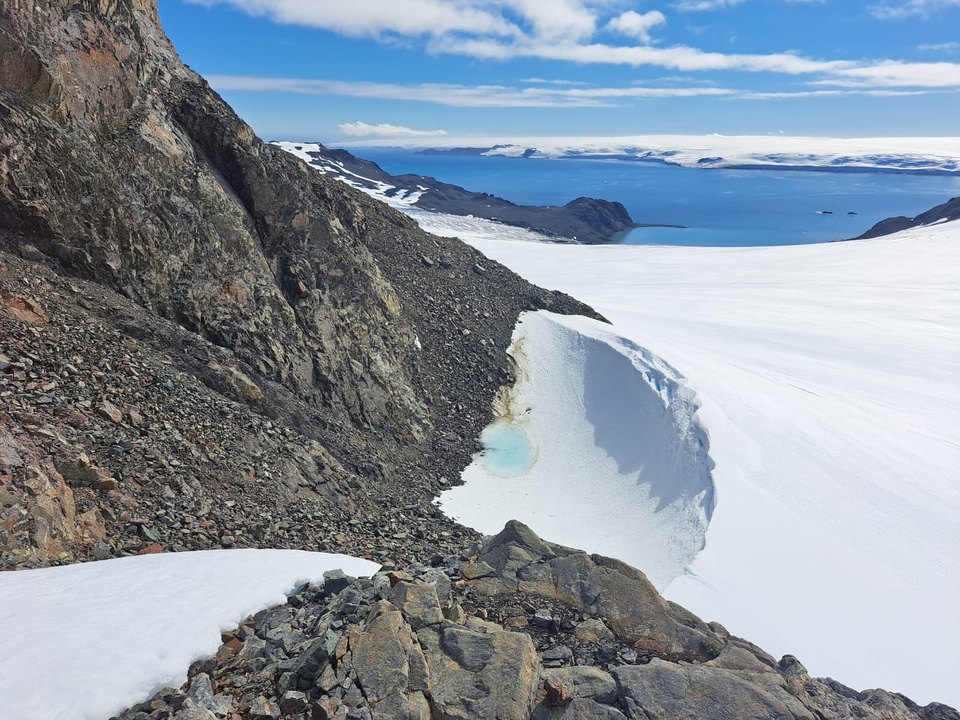
The South Shetland Islands are among the most restless places in Antarctica. They are volcanically active, they sit in the path of the Antarctic jet stream and the storms it steers, and glaciers and frost are still reshaping them today.
Livingston's glaciers respond quickly to changes in climate. That makes the island a natural laboratory for watching ice advance and retreat, from about 24,000 years ago to the present day.
Climate change has, ironically, opened the archive. As the ice thins and retreats, it uncovers quartz-bearing rock that lay buried for millennia—exactly the material exposure dating needs. And learning how these glaciers responded to past warming, under conditions not unlike today's, helps sharpen predictions of how they will respond next.
Clocks written in quartz
From a hammer on a ridge to an atom count in Măgurele
1Choose the right rock
Nunataks—rocky peaks that stick up through the ice—in the island's interior, and the landforms glaciers left behind at its edges. Each records a different moment of the retreat.
2Collect it
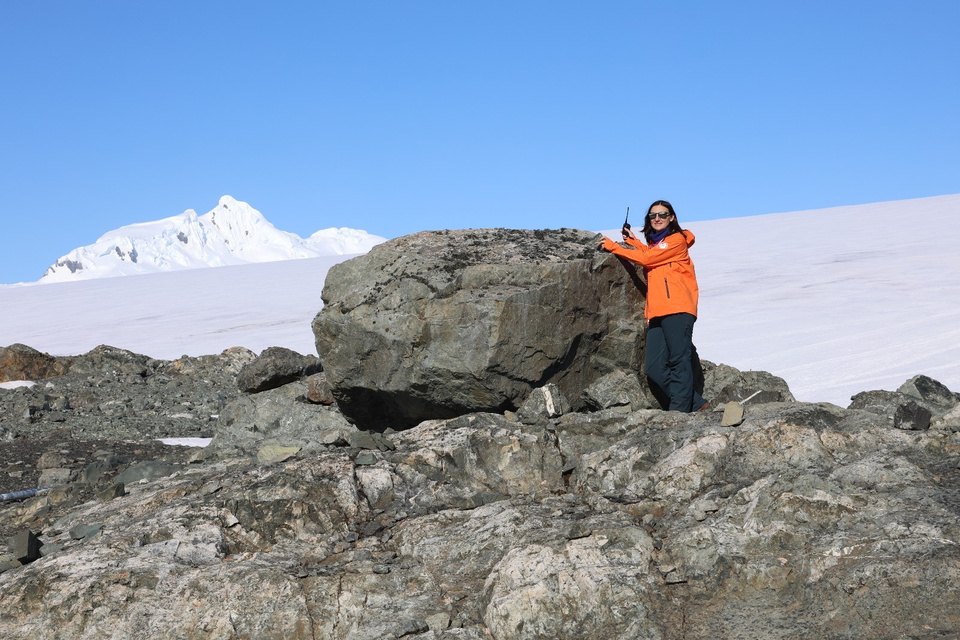
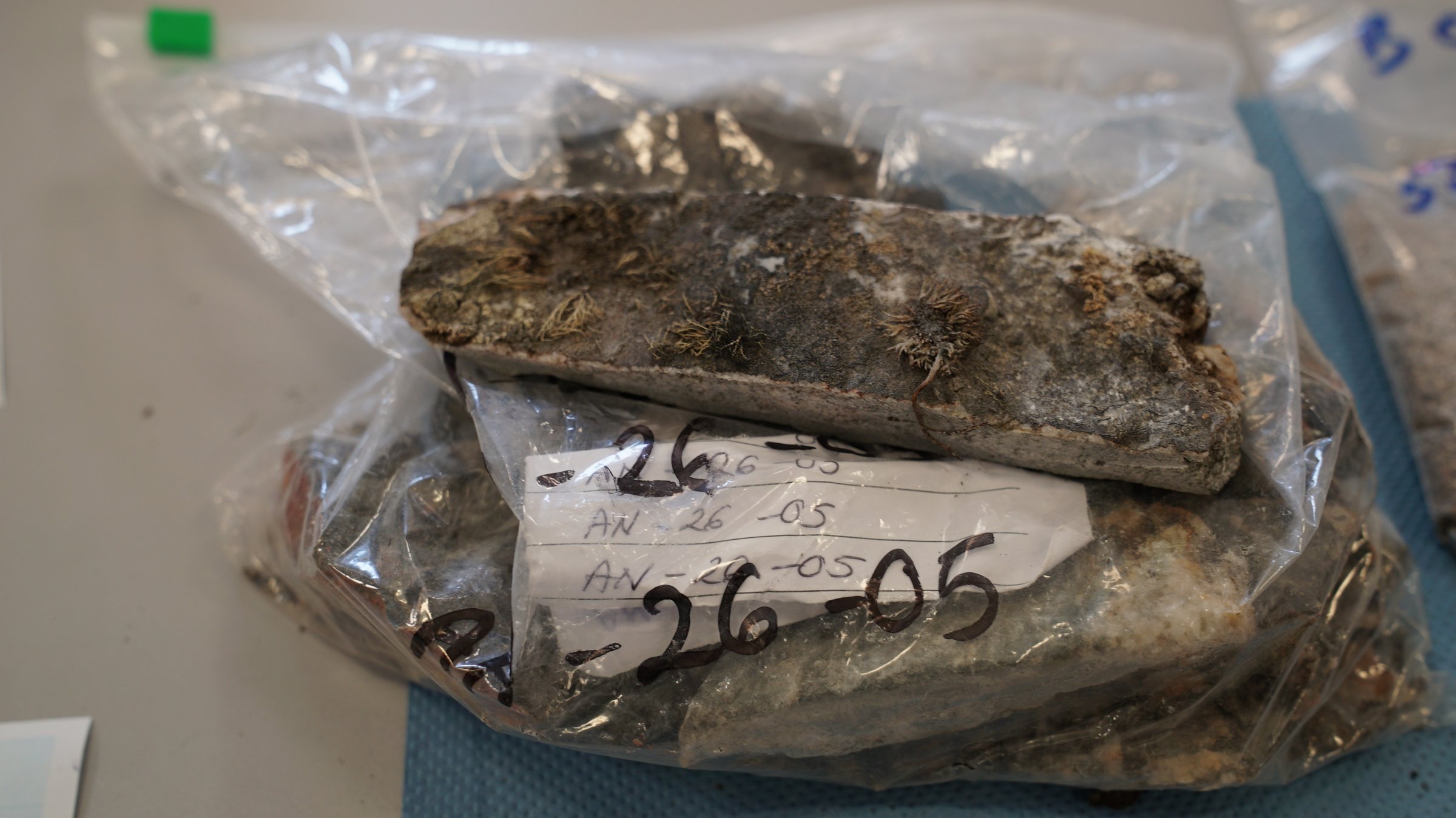
About 300 g of quartz-bearing rock per sample, chipped from the very surface. Because cosmic-ray production depends on altitude and latitude, where each sample came from matters as much as the rock itself.
3Crush it and separate the quartz
Back home the rock is crushed and sieved, and the quartz is isolated and cleaned of everything else.
4Extract the beryllium
In our chemistry laboratory the quartz is dissolved and the beryllium chemically extracted, using a protocol implemented at IFIN-HH in recent years. The whole chain, from crushing to counting, now runs in Romania.
5Count the atoms
The RoAMS 1 MV Tandetron measures the 10Be/9Be ratio with accelerator mass spectrometry, sensitive to one rare atom in 1015.
6Turn atoms into an age
Divide the number of 10Be atoms by the rate they form at that spot, and you have the time since the surface was uncovered—when the ice retreated.
The catch: rocks that remember too much
Livingston's ice is polythermal: in places its margin is frozen to the ground, so it can come and go without scraping the rock clean. Rock that escaped erosion still carries nuclides from earlier spells of exposure—what geologists call inheritance—and can look older than the retreat we want to date.
The answer is more, and better-chosen, samples: the places where the ice did erode are the ones that reveal its most recent retreat. Measuring 26Al alongside 10Be adds a cross-check, because the two decay at different rates.
ISOPOLAR
Revealing the past and present environmental changes on Livingston Island
ISOPOLAR began in 2024, after IFIN-HH and the Bulgarian Antarctic Institute signed a memorandum of scientific cooperation. It brings geochronological, glaciological and climatological methods together to reconstruct the island's physical environment across four chapters of its history:
- how the island formed;
- the Pleistocene glaciation, and the deglaciation that followed;
- the last few decades;
- the present day.
Alongside the rock dating, the project studies the layering and physical–chemical properties of firn—compacted, granular snow—and of the ice laid down in recent decades.
On the Romanian side, researchers from IFIN-HH and ELI-NP take part. For Romania the project is also a foundation: it builds the country's own expertise in cosmogenic-nuclide dating, from fieldwork to the final atom count.
Progress, July 2026
- Two field campaigns completed on Livingston Island.
- 60 rock samples collected.
- 6 chemically processed; the other 54 in physical processing.
- Results will be published, and further campaigns may extend sampling across more of the island.
Meet Daniela Pascal
From Făgăraș to Antarctica
Daniela is a geographer by training, with a PhD in geography, and a researcher in our department. She came to IFIN-HH in 2016, when she began her doctorate at the University of Bucharest's Faculty of Geography, and has worked on surface-exposure dating ever since. Her path ran from the glacial landscapes of Romania's own mountains to the far end of the planet—a road she told at the 2025 DFNA annual report in a talk called From Făgăraș to Antarctica: A Lifetime Journey.
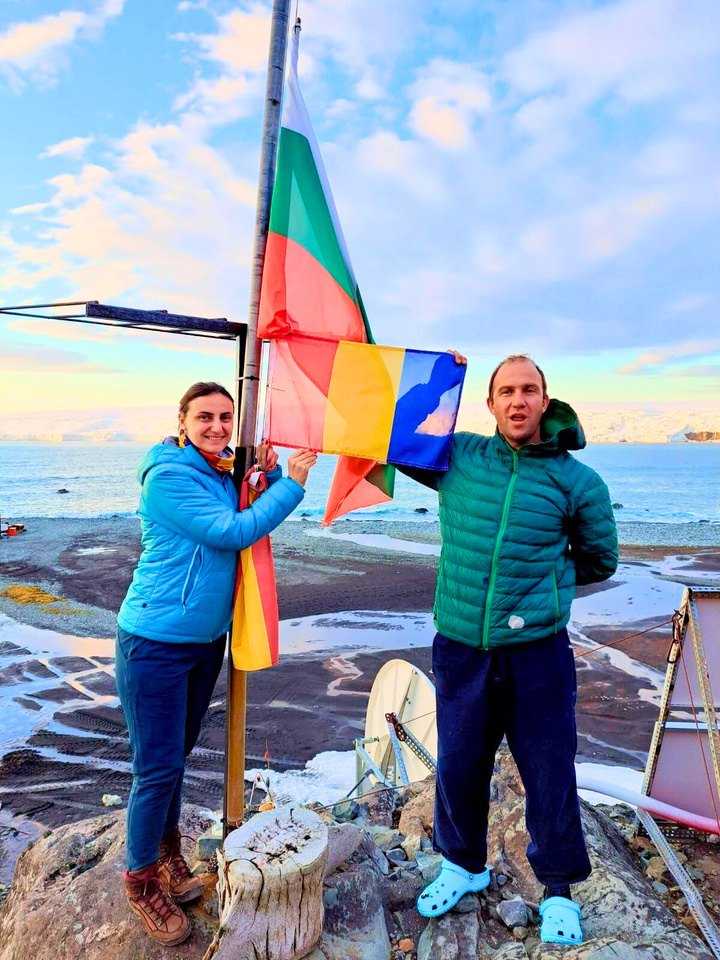
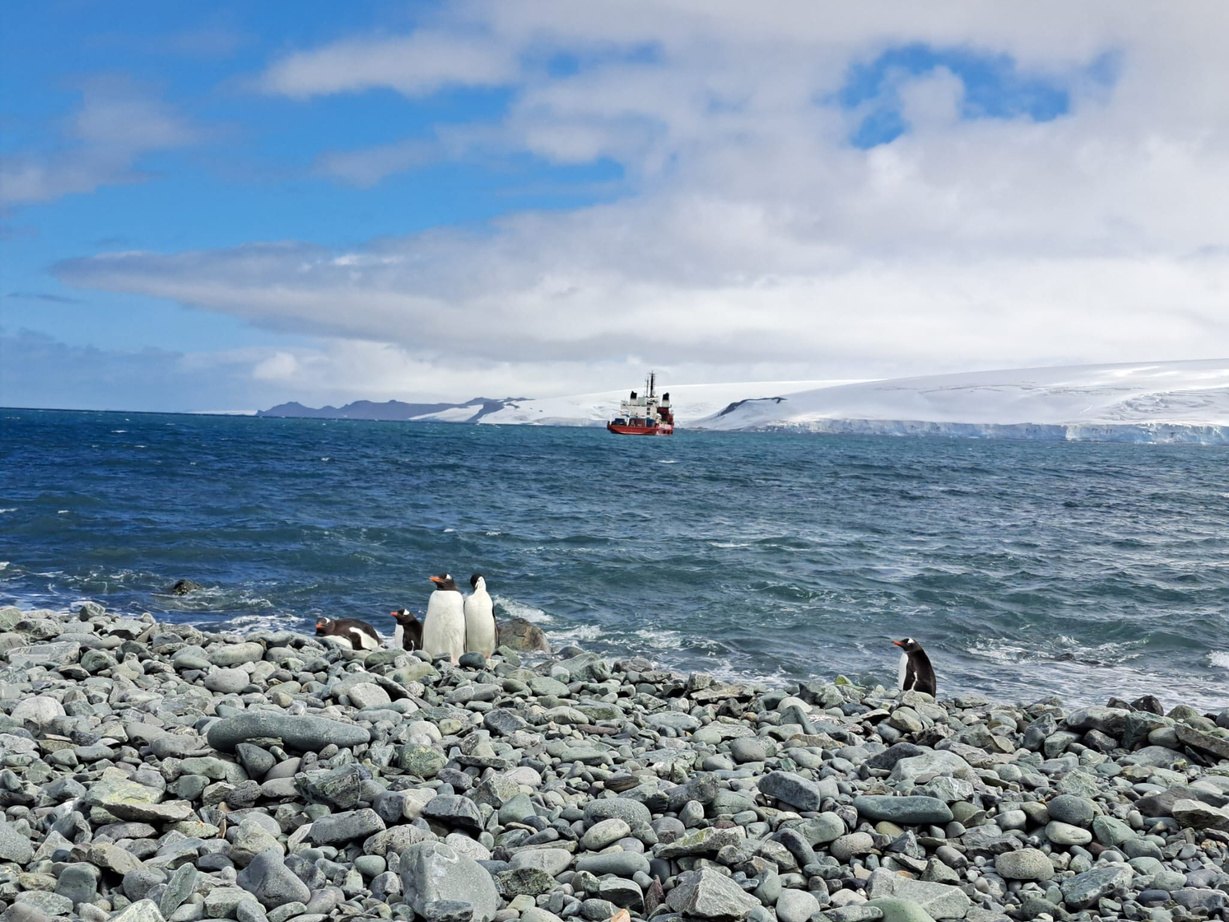
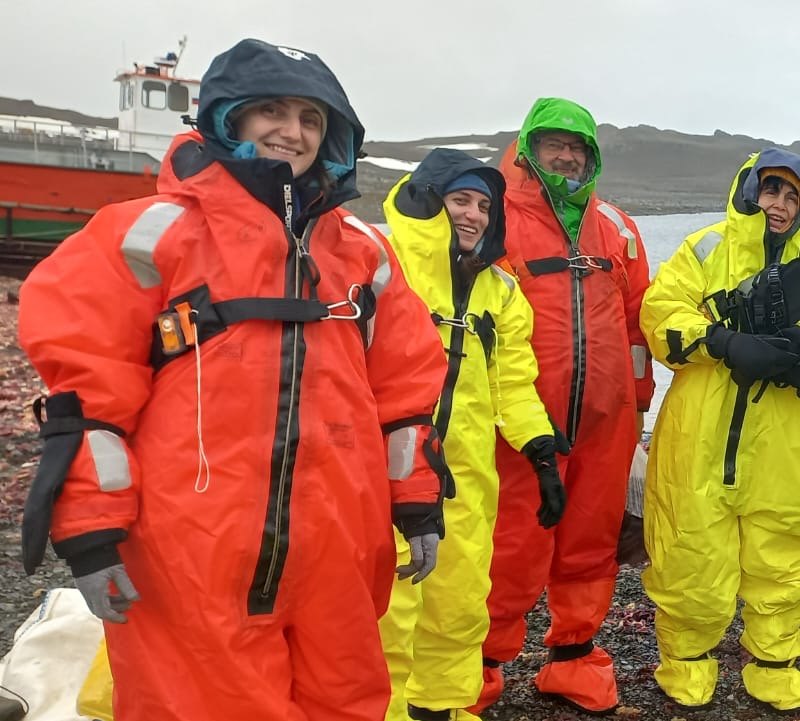
Getting there was an expedition in itself. She left Bucharest on 11 January 2025, met the Bulgarian team in Rome, and travelled on through Buenos Aires, Río Gallegos and Punta Arenas to King George Island, followed by eight hours at sea to Livingston. It was her first time in Antarctica. She spent about a month at the St. Kliment Ohridski base with the third group of the XXXIII Bulgarian Antarctic Expedition, which ran until 28 February. Her first sight of the island, a wall of glacier ice seen from the ship, left her speechless.
“The Bulgarian base feels like a cabin full of friends you seem to have known all your life, even when you don't speak the same language.”
Since coming home she has become one of the faces of Romanian research: her story opened the National Authority for Research's campaign promoting Romanian science, with a short film, O Româncă în Antarctica!, made with physicist Cristian Presură.
In the news
Press coverage and talks
Press
- InHouse no. 83, National Authority for Research, January 2025 — cover story, IFIN-HH explorează Antarctica.
- AGERPRES / BTA, 1 February 2025 — Geomorfologul Daniela Pascal: Înțelegerea trecutului este cheia pentru preconizarea viitorului.
- Radio România Cultural, Născut în România, March 2025 — interview with Daniela Pascal.
- Știri pentru copii, 24 March 2025 — O româncă în Antarctica.
- Curs de Guvernare, 30 March 2025 — the national campaign for Romanian research opens with Daniela's story.
- BTA, 1 July 2026 — Romanian geomorphologist Daniela Pascal presents joint study on climate change in Antarctica.
Talks
- April 2025 — AMS seminar at IFIN-HH, Accelerator Mass Spectrometry for non-14C applications, including the first Livingston Island results.
- December 2025 — DFNA Annual Report: From Făgăraș to Antarctica: A Lifetime Journey.
- 1 July 2026 — Bulgarian–Romanian Symposium on Scientific Research in Antarctica, GeoEcoMar, Constanța.
Livingston Island in pictures
Fieldwork at the edge of the ice
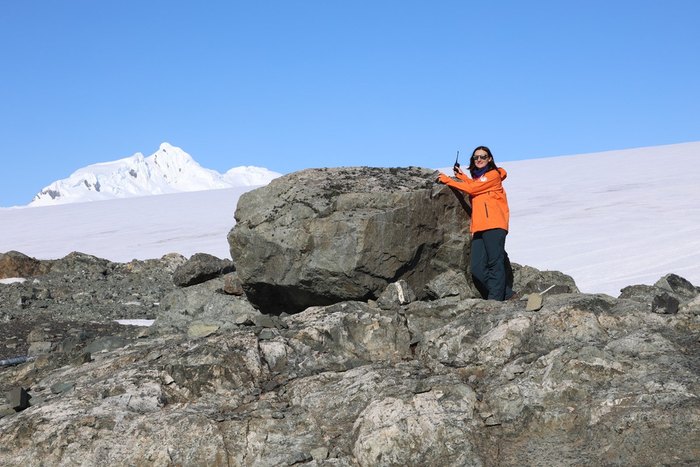
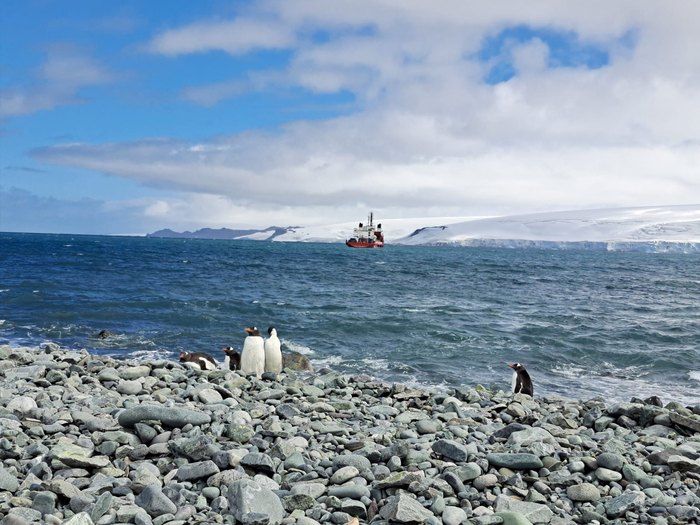
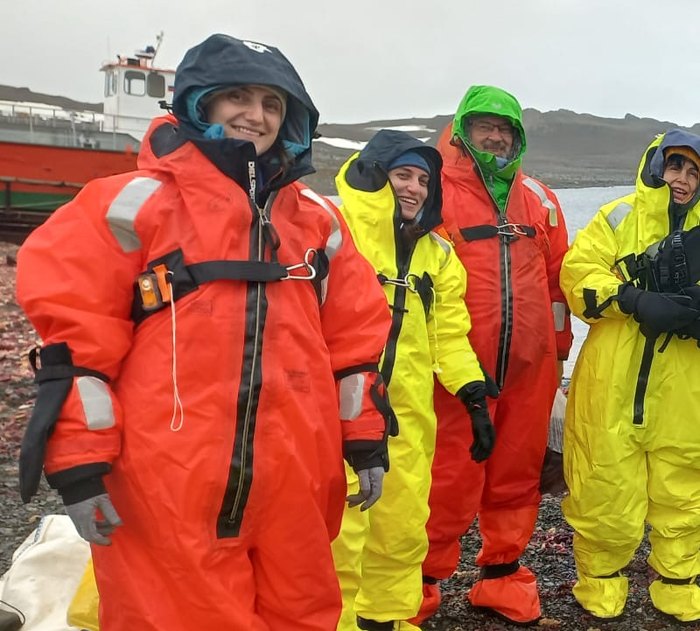
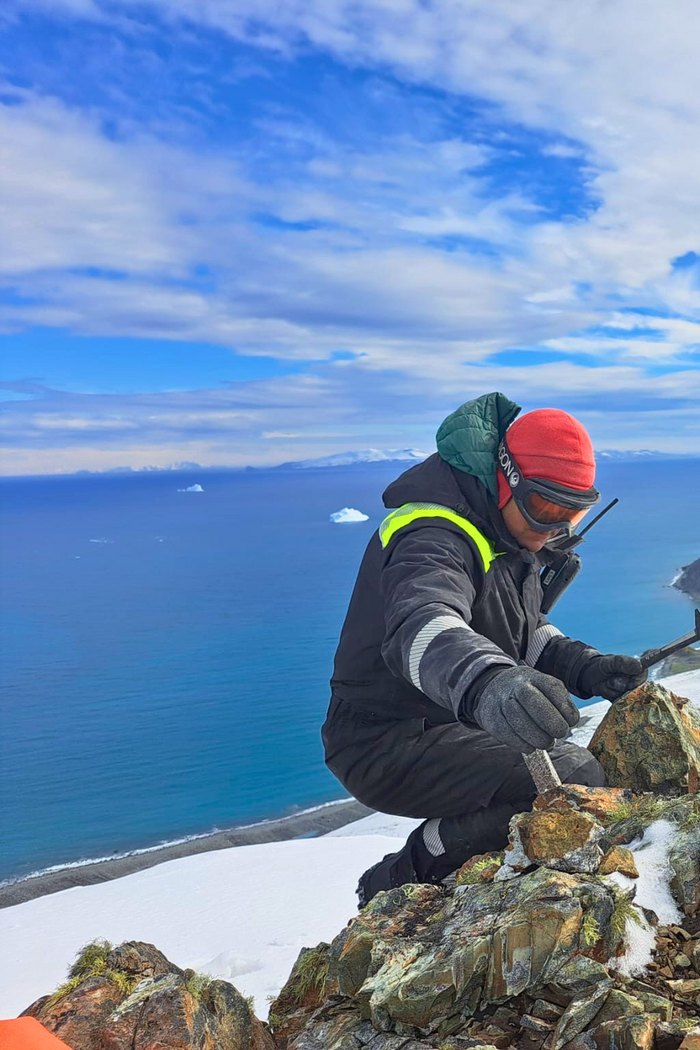
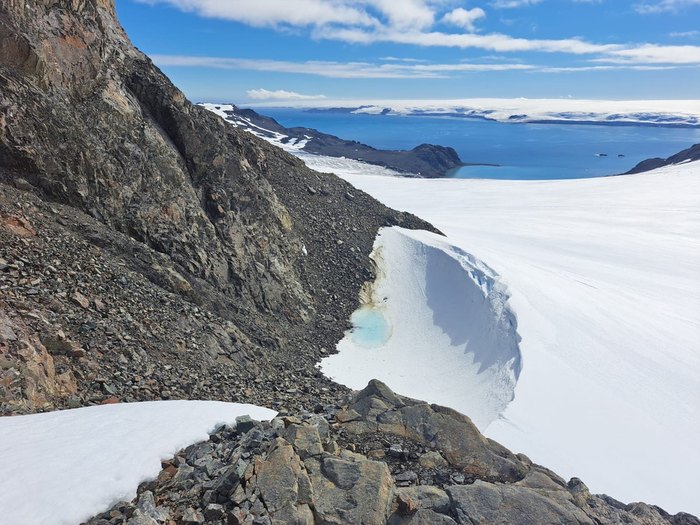
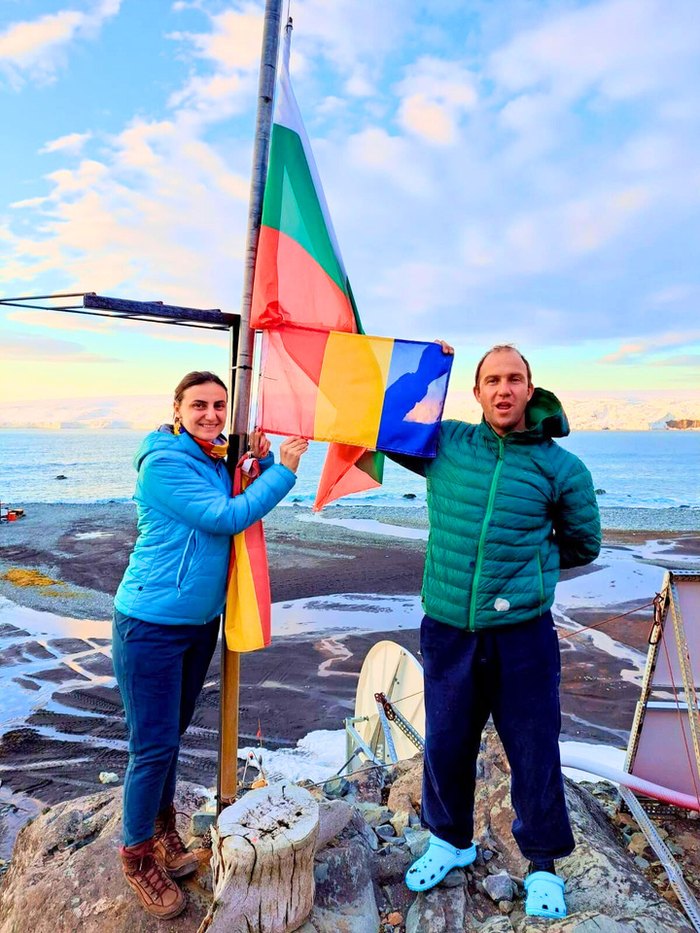
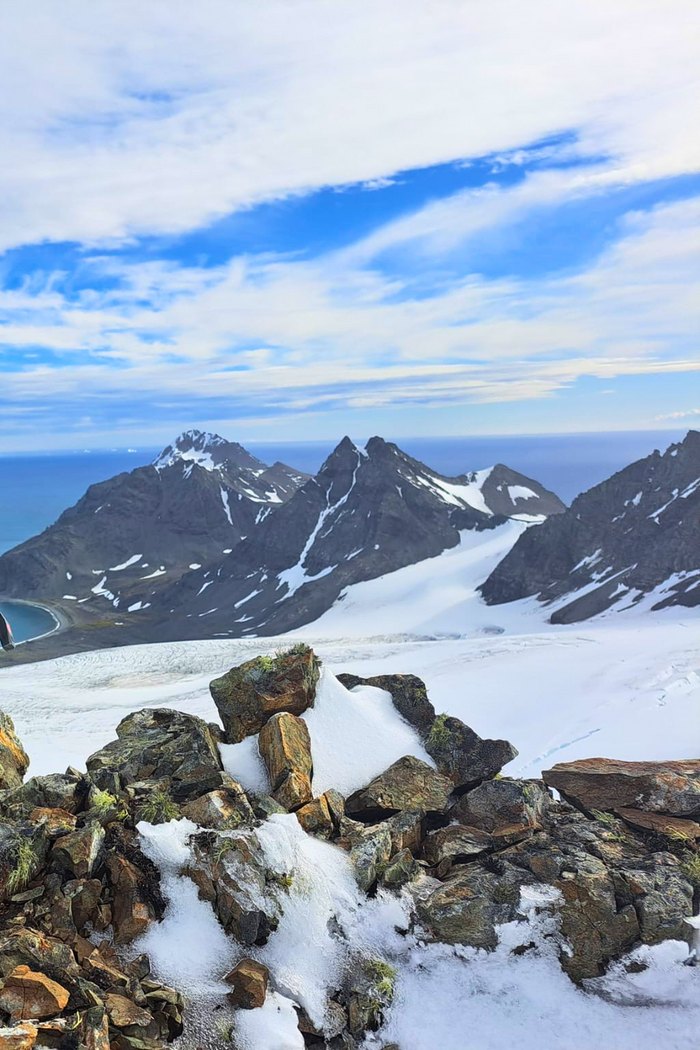
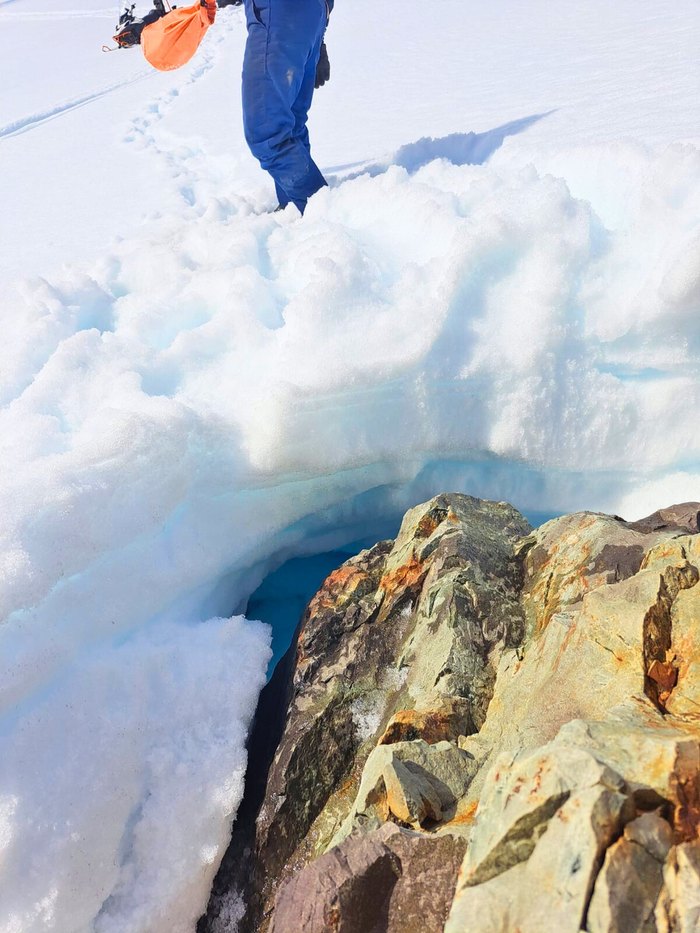
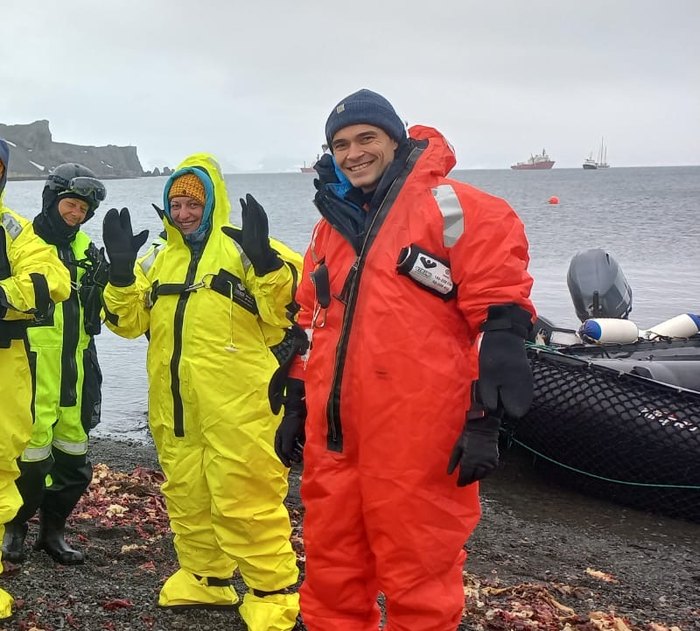
Photographs: InHouse no. 83, National Authority for Research, January 2025.
Want to date a glacier?
Our students page lists a thesis on dating glacial landforms with cosmogenic 10Be, using Livingston Island as its case study. You'd learn quartz separation, beryllium chemistry, AMS sample preparation and the maths that turns an atom count into an age.
Contact: daniela.pascal [at] nipne.ro
Student opportunities More about RoAMS