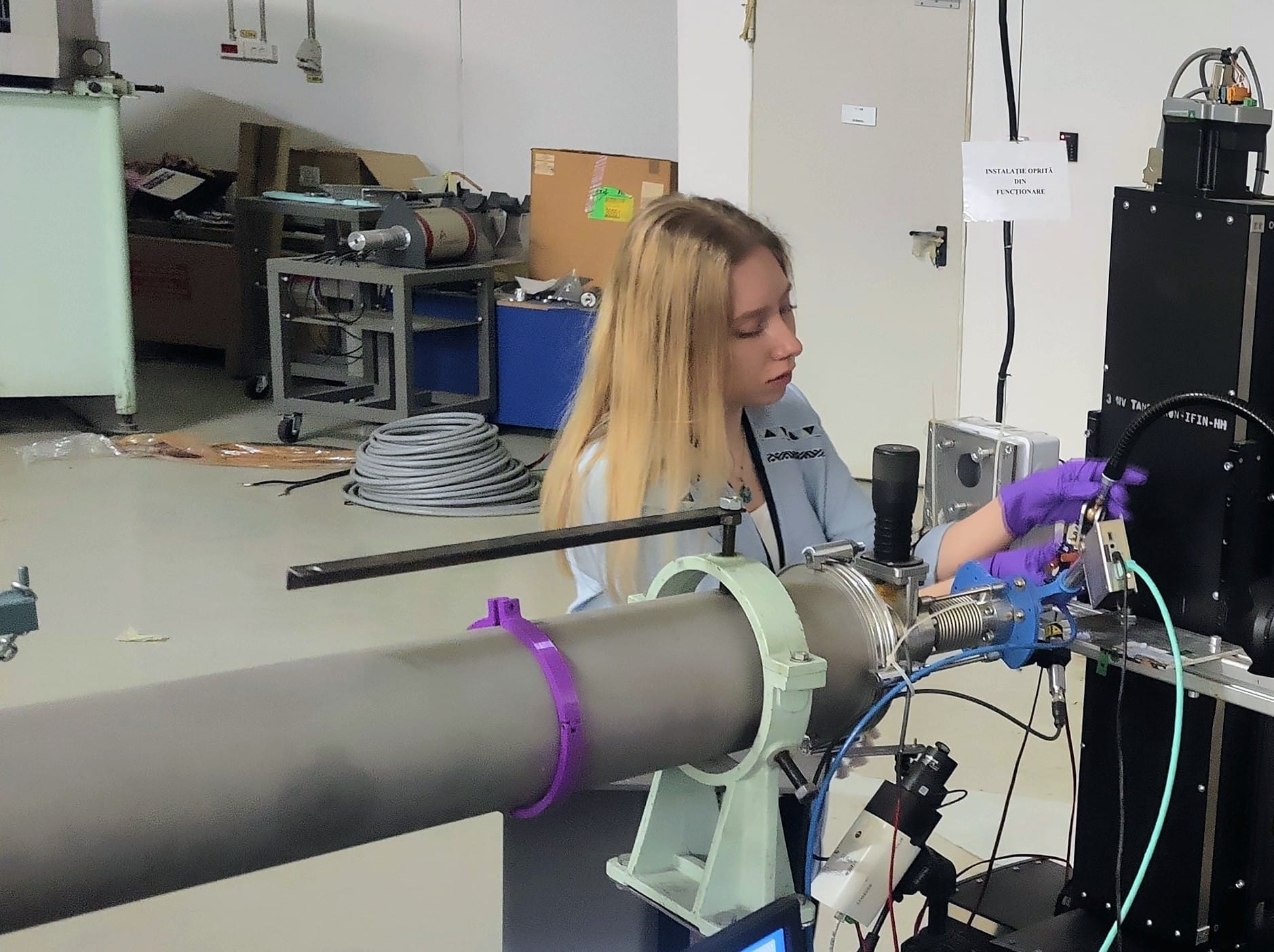
Every object is a witness
A bronze blade, a gold bracelet, a fragment of pottery—each one carries a silent record of the people who made it: the materials they chose, the recipes they refined, the hands and tools that shaped it. Archaeometry is how we read that testimony, applying the exact sciences of physics and chemistry to art and archaeology.
At DFNA we bring an unusually complete toolbox to that task—dating, elemental composition and 3D imaging under one roof—drawing on AMS, X-ray CT, XRF, PIXE, LA-ICP-MS and SEM-EDX. For each object we choose the technique, or combination of techniques, that answers the question with the least possible intervention—non-destructive where we can, a tiny sample only where we must.
The work follows three threads: ask the right question, reveal the answer with the least intervention possible, and help preserve the object for the future.
1 · Ask the question
What an artefact can tell us — if you know what to ask
Analytical methods grounded in atomic and nuclear phenomena let us ask remarkably specific questions of an object. What is it made of? How was it made? Where did its raw materials come from? Is it genuine? How old is it?
Composition reveals the raw materials and alloy recipes that ancient societies discovered and refined; trace-element fingerprints point to provenance and help reconstruct the exchange and trade networks that moved goods across the ancient world. Imaging and microanalysis expose manufacturing techniques—casting, joining, surface finishing—hidden in the object's structure.
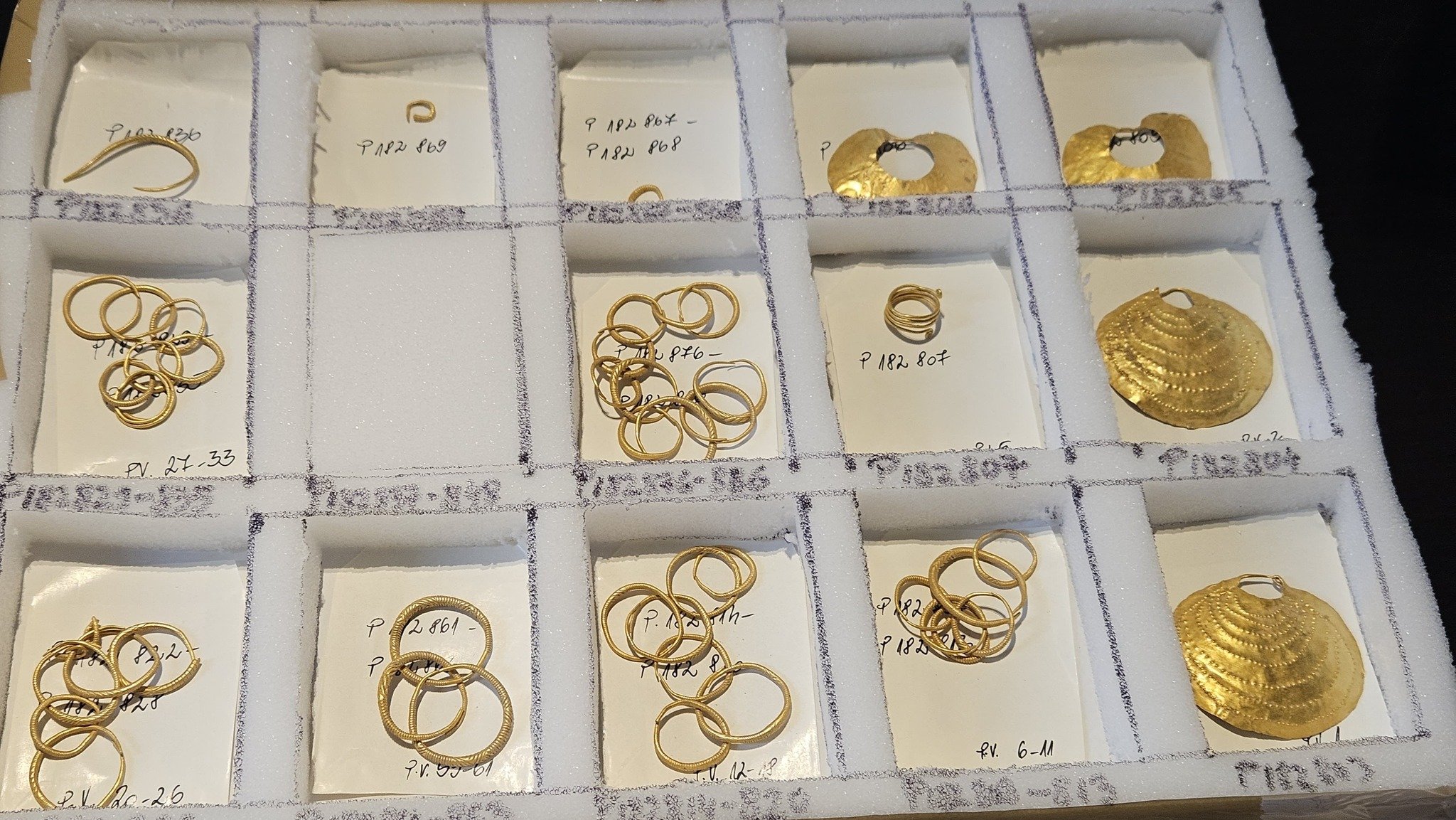
These same questions underpin authenticity testing for objects proposed for acquisition or appearing on the art market—as in the well-known case of the Dacian gold bracelets investigated at IFIN-HH, the subject of several published studies. More recently, our department was also called on to analyse a 3,000-year-old gold hoard found near Cluj—another Romanian treasure whose authenticity science helped confirm.
2 · Reveal it
From fully non-destructive scans to milligram micro-samples
Heritage objects are irreplaceable, so we always start with the least invasive option. Some of our techniques are genuinely non-destructive—the object goes home unchanged. Others need a tiny sample, and a few consume the material they measure. The trade-off is honest and worth it: even the destructive methods need only milligrams, and they answer questions—like an absolute radiocarbon age—that nothing else can. We match the technique to the object and the question, combining methods to learn the most from the smallest possible intervention. Each card below flags how invasive it is.
Radiocarbon dating of organic materials places objects in absolute time, back to ~50,000 years. The sample is consumed in the process (converted to graphite), so only a small amount is needed — see the sampling guidelines. Run on our RoAMS 1 MV accelerator.
Question answered: how old?In-air proton beams from the 3 MV Tandetron map elemental composition of large or delicate objects without sampling.
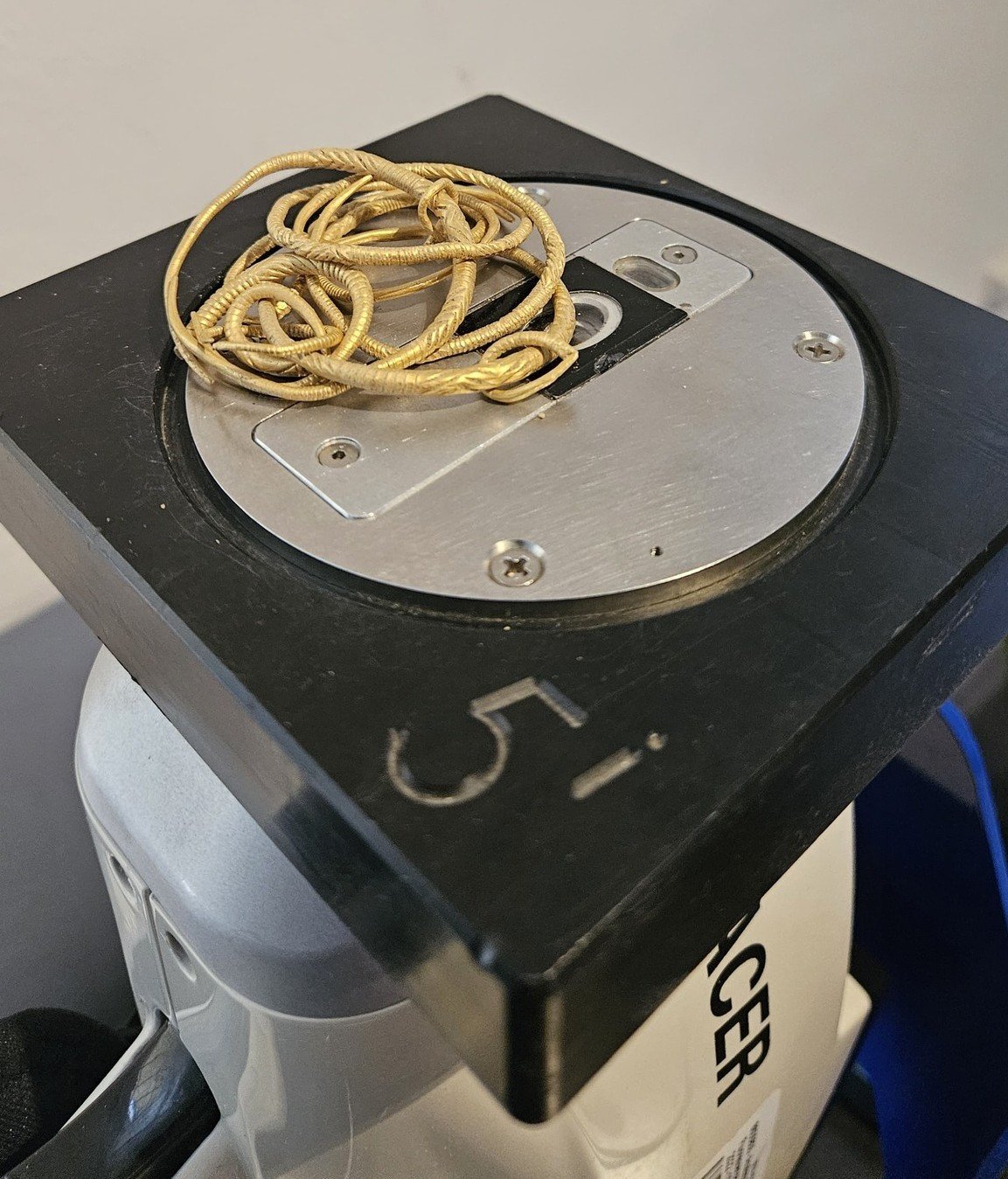
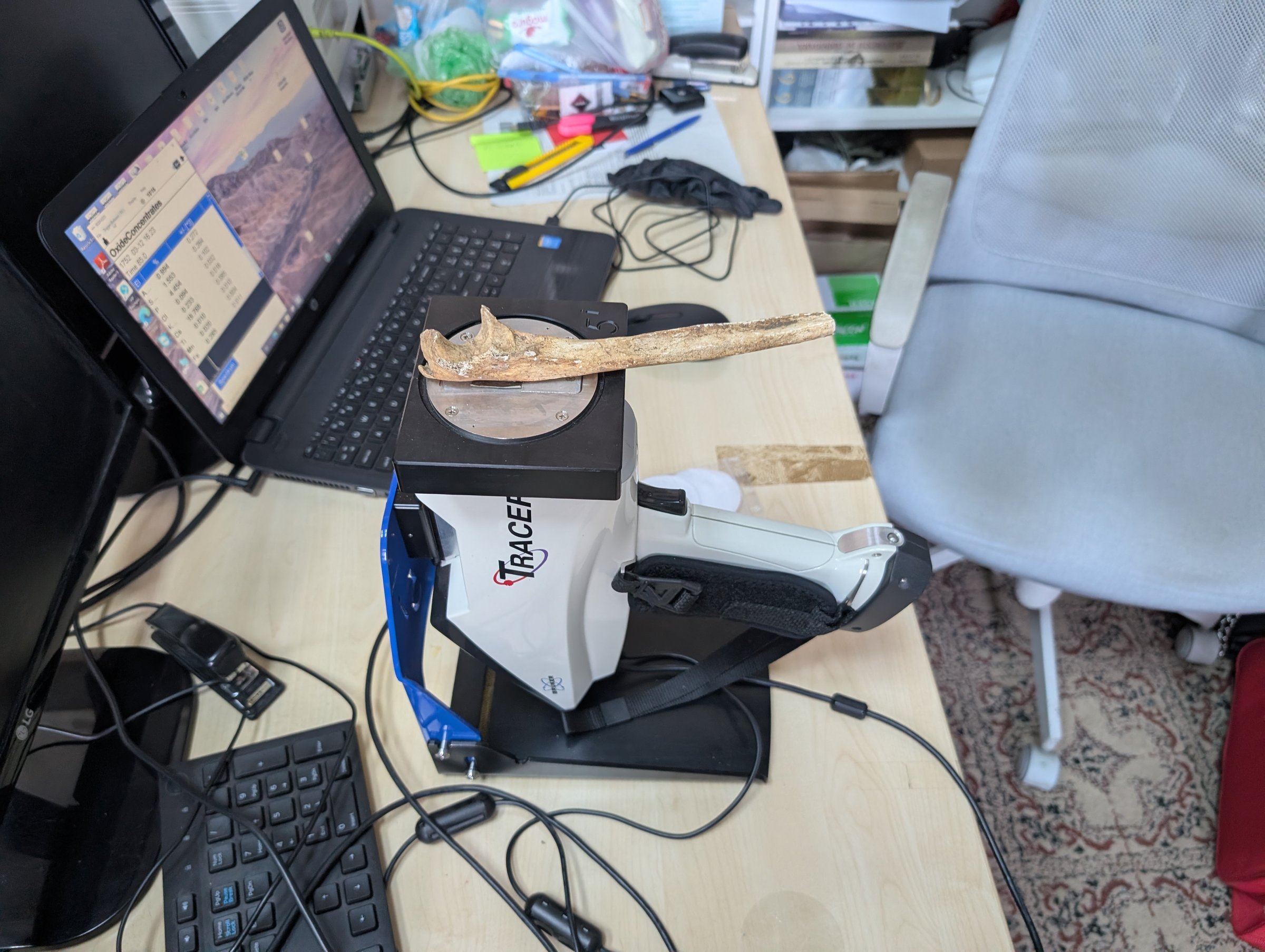
Question answered: what & where from?Two spectrometers cover different jobs: a portable Bruker Tracer 5i (3 or 8 mm spot) for work in museums and on site, and a fixed SPECTRO MIDEX M (collimators 0.1–2 mm) for point-focused analysis in the lab. Together they identify elements from Mg to U—down to Na on the fixed instrument—at a few ppm for mid-Z elements, tens of ppm for the heaviest. The signal comes from a few µm deep in dense metals, up to a few millimetres in lighter materials. Ideal for metals, coins, glass, enamels, pigments and ceramics.
Quantitative multi-element compositionElectron microscopy with EDS at E = 1–30 keV, I = 1–2000 nA. Small objects can be imaged whole, but larger ones usually need a small extracted, prepared specimen, analysed in vacuum. Imaging to a few nm; EDS resolution ~129 eV (Mn Kα), detection ~100 ppm; elements Be–Pu detected, Z > 10 quantified. 2D elemental maps reveal corrosion layers, inclusions, phases and manufacturing features.
Microstructure & elemental mapsLaser-ablation ICP-MS delivers high-sensitivity trace-element analysis by vaporising a microscopic spot of material—leaving only tiny, often invisible craters. Powerful for provenance studies and workshop attribution.
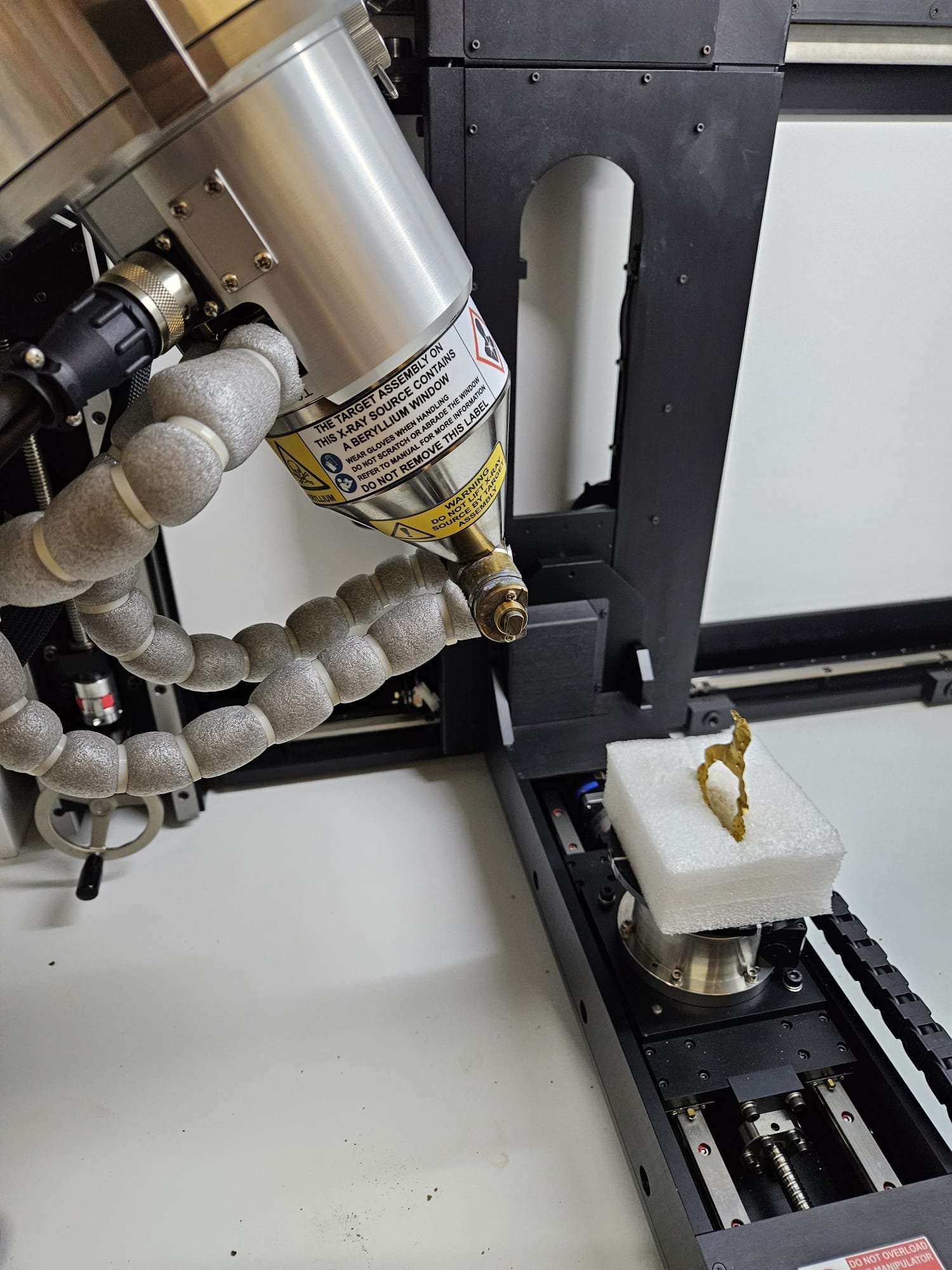
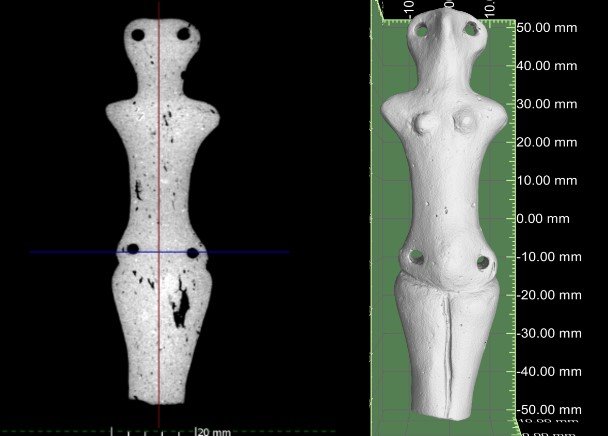
Trace-element fingerprintingA Nikon Metrology XT H 225 micro-focus system (few-µm focal spot, 30–225 kV, adjustable current & filtration, multi-axis positioning) builds full 3D models—revealing casting quality, porosity, internal defects and inclusions hidden inside an object.
Internal structure in 3D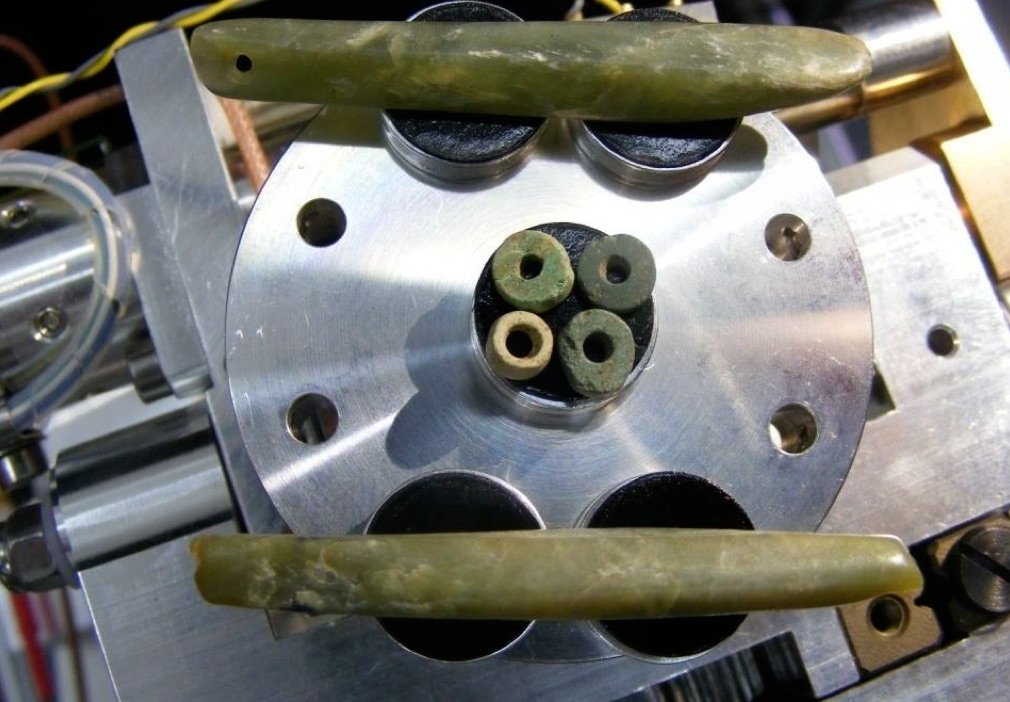
3 · Preserve it
From understanding decay to slowing it down
Knowing what an object is made of is also the first step in protecting it. Physico-chemical analysis supports conservation and restoration—informing condition assessment, treatment planning and long-term monitoring of fragile heritage.
Every cultural object ages and degrades; patinas form, corrosion advances, materials weaken. By characterising both the causes and the dynamics of that deterioration—surface versus bulk, the structure of corrosion layers—we help design strategies that prevent or slow it, so objects survive for future generations to study and enjoy.
The same rigour underpins authenticity testing, giving museums and collectors trustworthy evidence before an object changes hands.
A field built on collaboration
Heritage experts and physical scientists, working together
Archaeometry only works when disciplines meet: archaeologists, curators and historians bring the questions and the context; physicists and chemists bring the instruments and the rigour. Over recent years a real critical mass of DFNA researchers has formed around this field—especially 14C dating, compositional analysis and CT imaging—earning national and international visibility through numerous projects.
DFNA leads and joins collaborative projects and service missions with museums, conservation labs and archaeology institutes, on-site and in-situ. If you would like to cooperate or enquire about services, we would love to hear from you.