Specs at a glance
Key parameters of the TR-19 cyclotron
| Manufacturer | Advanced Cyclotron Systems Inc. (ACSI), Vancouver, Canada |
|---|---|
| Type | Variable-energy negative-ion (H−) cyclotron, vertical acceleration plane |
| Proton energy | 14–19 MeV, adjustable in 100 keV steps |
| Extraction | Dual ports via pyrolytic carbon stripper foils — two beams simultaneously |
| Beam current | Up to ~300 µA total (dual-beam) |
| Targets | Solid, liquid and gaseous — simultaneous irradiation |
| Routine isotopes | 11C, 13N, 15O, 18F (PET) |
| Research isotopes | 64Cu, 89Zr, 124I |
| Output | Up to 15 Ci of 18F per hour of irradiation |
| Operation | Fully automated |
What it is
A fully automated, variable-energy proton source for nuclear medicine
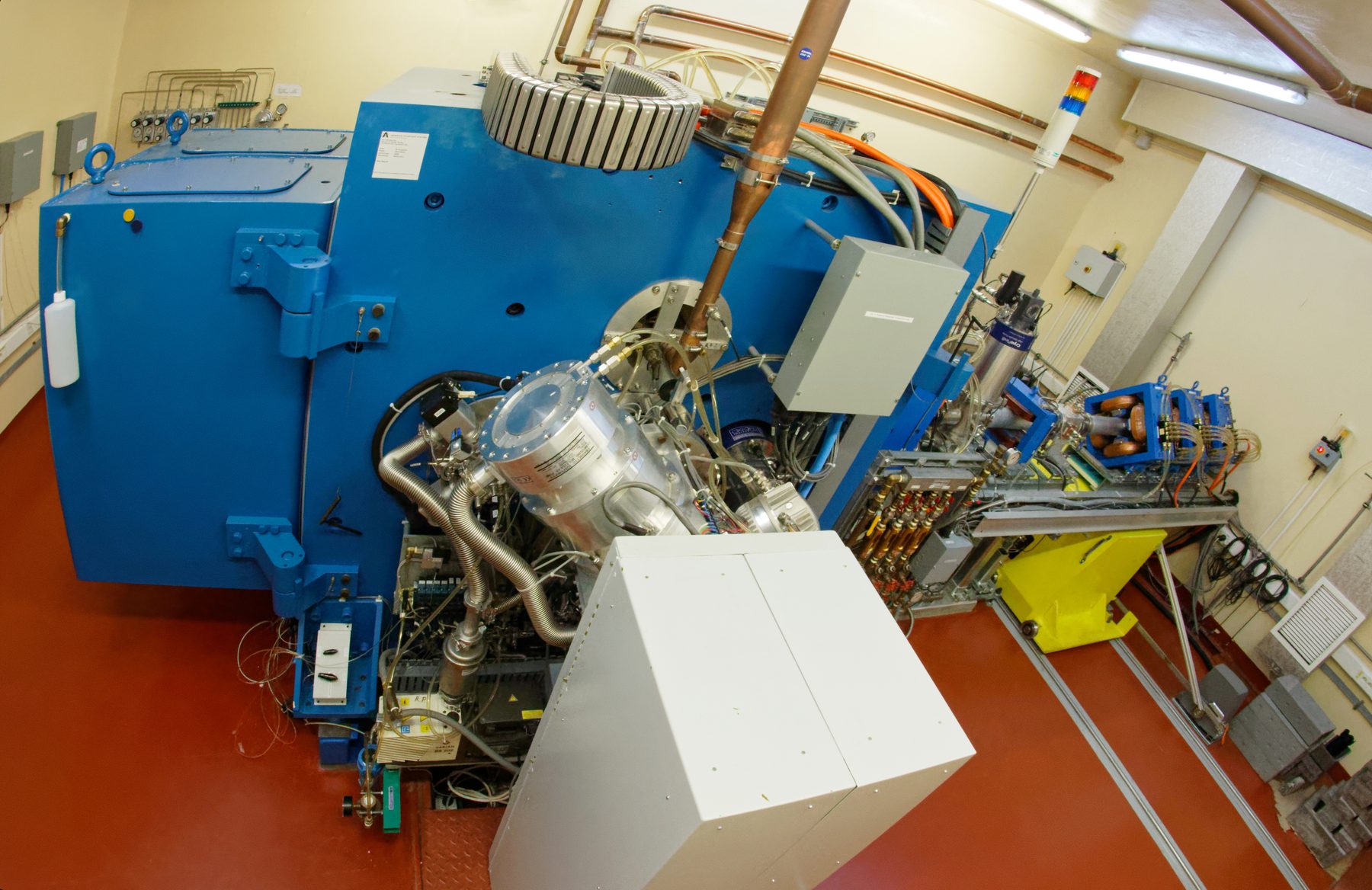
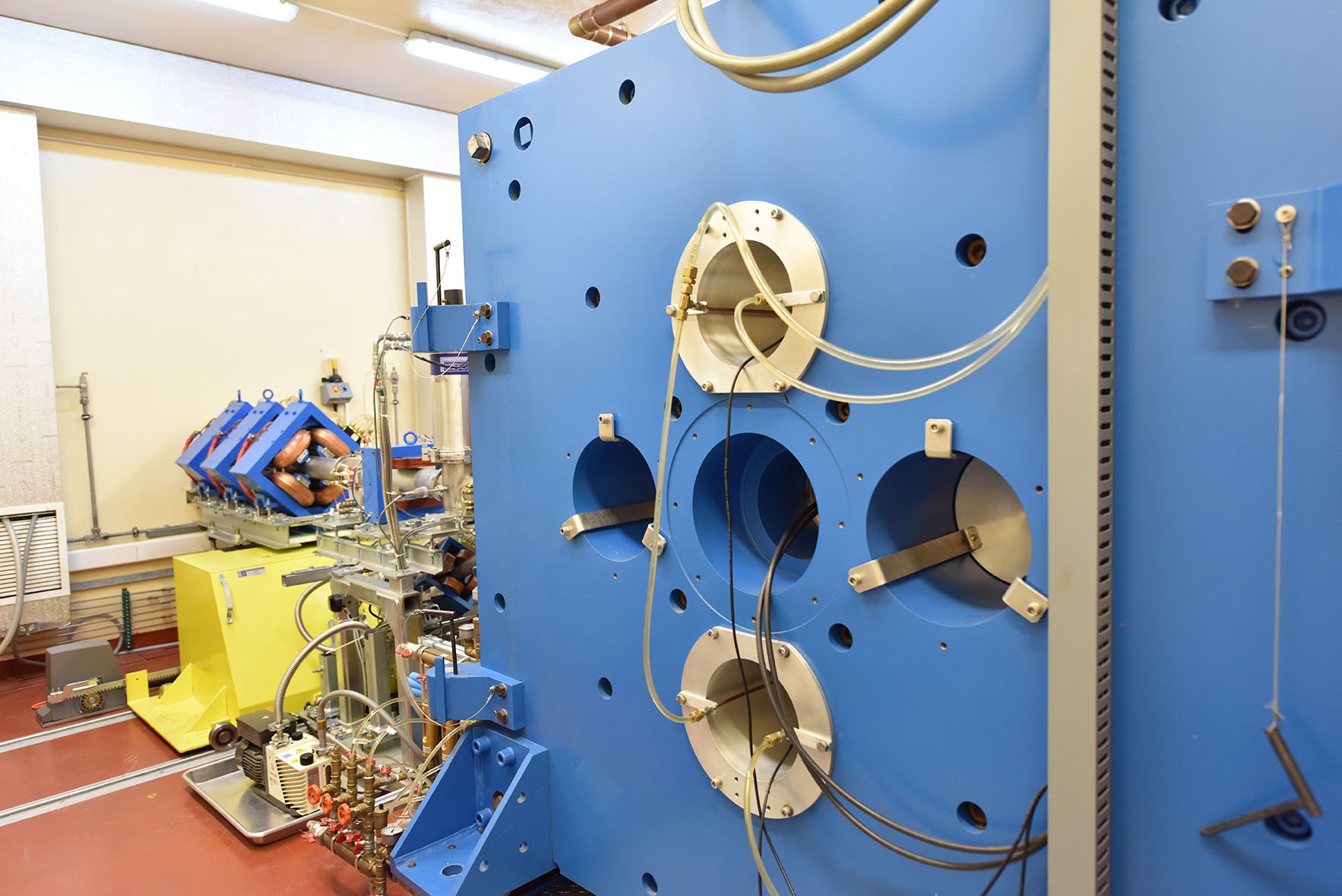
Many of the isotopes used in PET scans can’t be stockpiled — they decay within minutes to hours, so they have to be made fresh, on demand, close to the patient who needs them. That is exactly what this machine does. The TR-19, built by Advanced Cyclotron Systems Inc. (Vancouver, Canada), is a versatile, fully automated machine that vertically accelerates negative hydrogen ions (H−) from an external source to a variable energy of 14–19 MeV. Protons are extracted by stripping the hydrogen ions with pyrolytic carbon foils through two ports that can operate simultaneously, delivering a total beam current up to 300 µA.
That dual-irradiation capacity lets the TR-19 supply Romania's PET radioisotopes at national level while leaving headroom for research and development. A single hour of irradiation can yield up to 15 Ci of 18F, alongside a wide range of PET isotopes—18F, 11C, 15O, 13N, 124I, 64Cu and more.
Inside the machine
Extraction ports, beamlines and the solid-target station
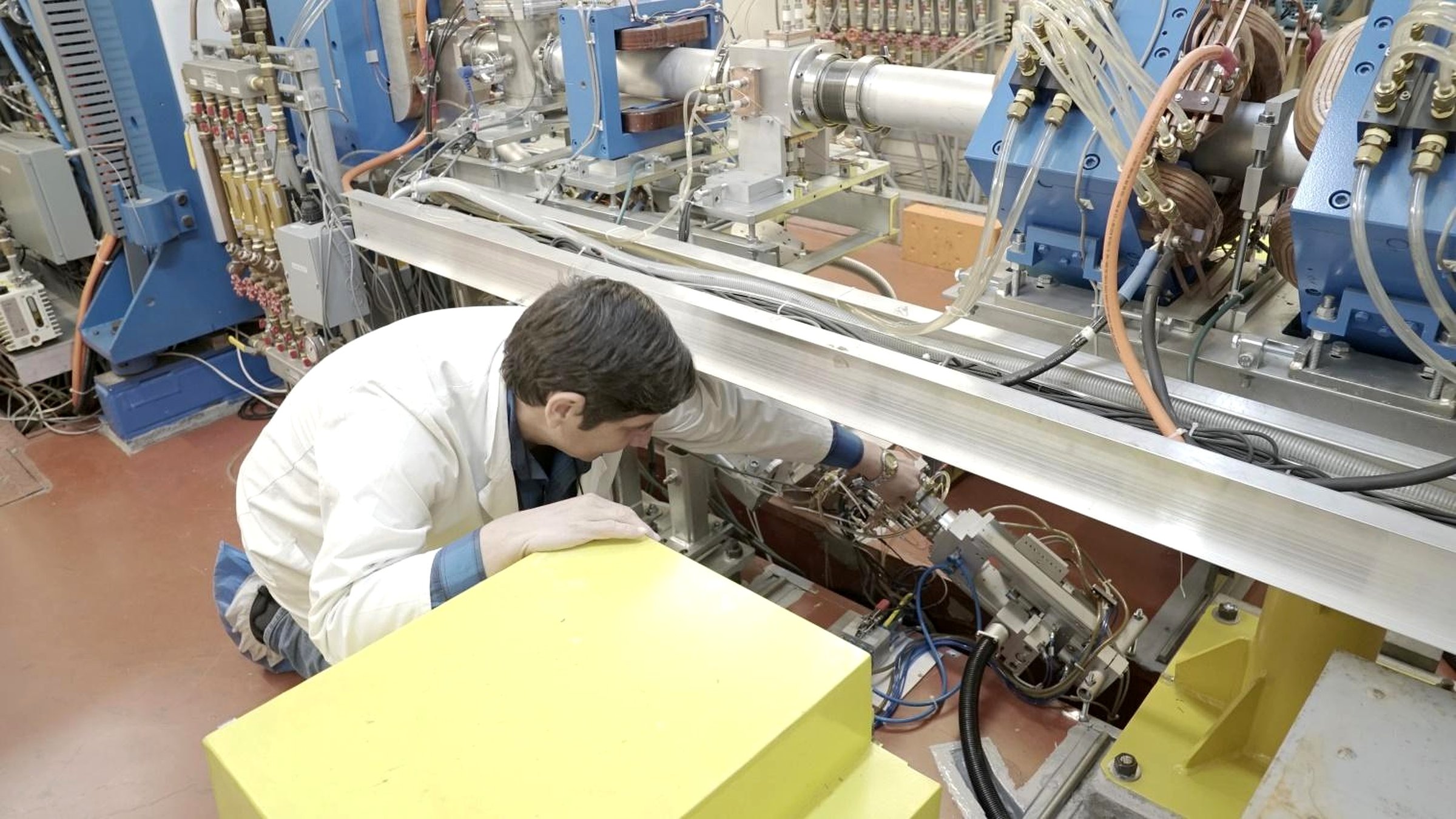
Beyond the standard extraction ports, the TR-19 feeds dedicated lines for research and solid-target irradiation:
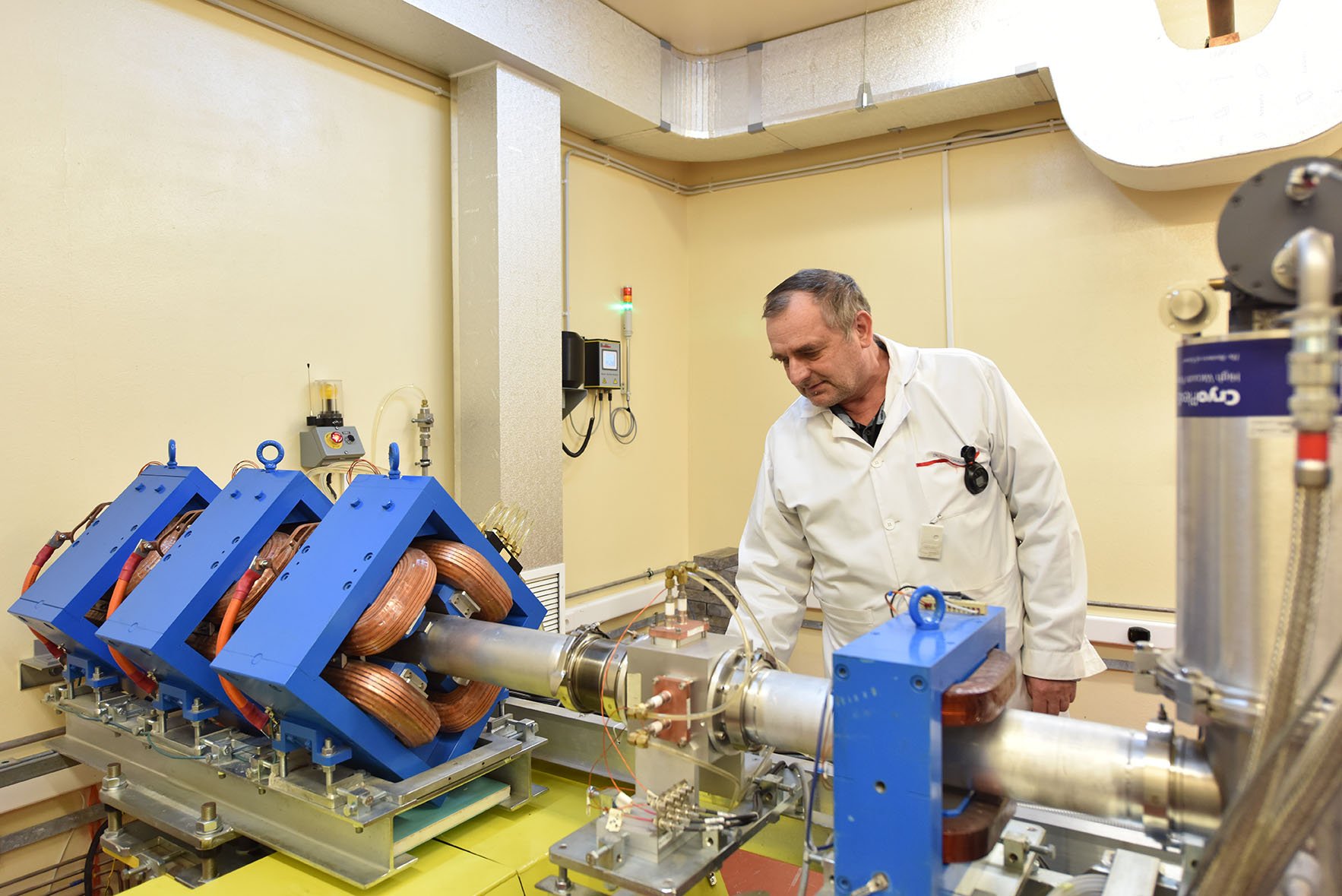
- Long extension line: a 6-metre external beamline carrying protons into an experimental hall for research, including proton radiobiology.
- Short extension line: a shorter beamline inclined at ~45°, terminating at a COMECER solid-target irradiation station.
- Direct extraction port: an ACSI solid-target holder can be mounted directly on the extraction port at 90°.
The solid-irradiation station belongs to the ALCEO series (Comecer, Italy)—an integrated system for producing 64Cu, 89Zr and 124I. It uses a pneumatic transfer system (PTS) and a dedicated cooling unit, and is enclosed in a local mobile radiation screen with multilayer walls (lead and borated polyethylene) to limit activation outside the station.
What it produces
From routine PET isotopes to novel theranostic radionuclides
Copper-64 (64Cu)
A sought-after radioisotope for high-resolution PET imaging and targeted radionuclide therapy.
- Production: via the 64Ni(p,n)64Cu reaction, bombarding an enriched 64Ni target (99.53%) electrodeposited onto a platinum backing.
- Beam optimisation: the 14 MeV beam is degraded to 11.6 MeV with a 320 µm aluminium foil to suppress stable 63Cu impurities.
- Result: carrier-free [64Cu]CuCl2, radionuclidic purity >99.99%.
Zirconium-89 (89Zr)
With a 78.4-hour half-life, ideal for long-duration PET and radiolabelled monoclonal antibodies.
- Production: via the 89Y(p,n)89Zr reaction, irradiating natural yttrium (89Y) foils.
- Beam optimisation: energy degraded to 12.9 MeV to avoid the long-lived 88Zr contaminant.
- Result: high-purity [89Zr]Zr-oxalate (≥99.99%).
Cyclotron-based research
Proton radiobiology, solid-target irradiation, and small-animal PET-CT
Experimental proton radiobiology line
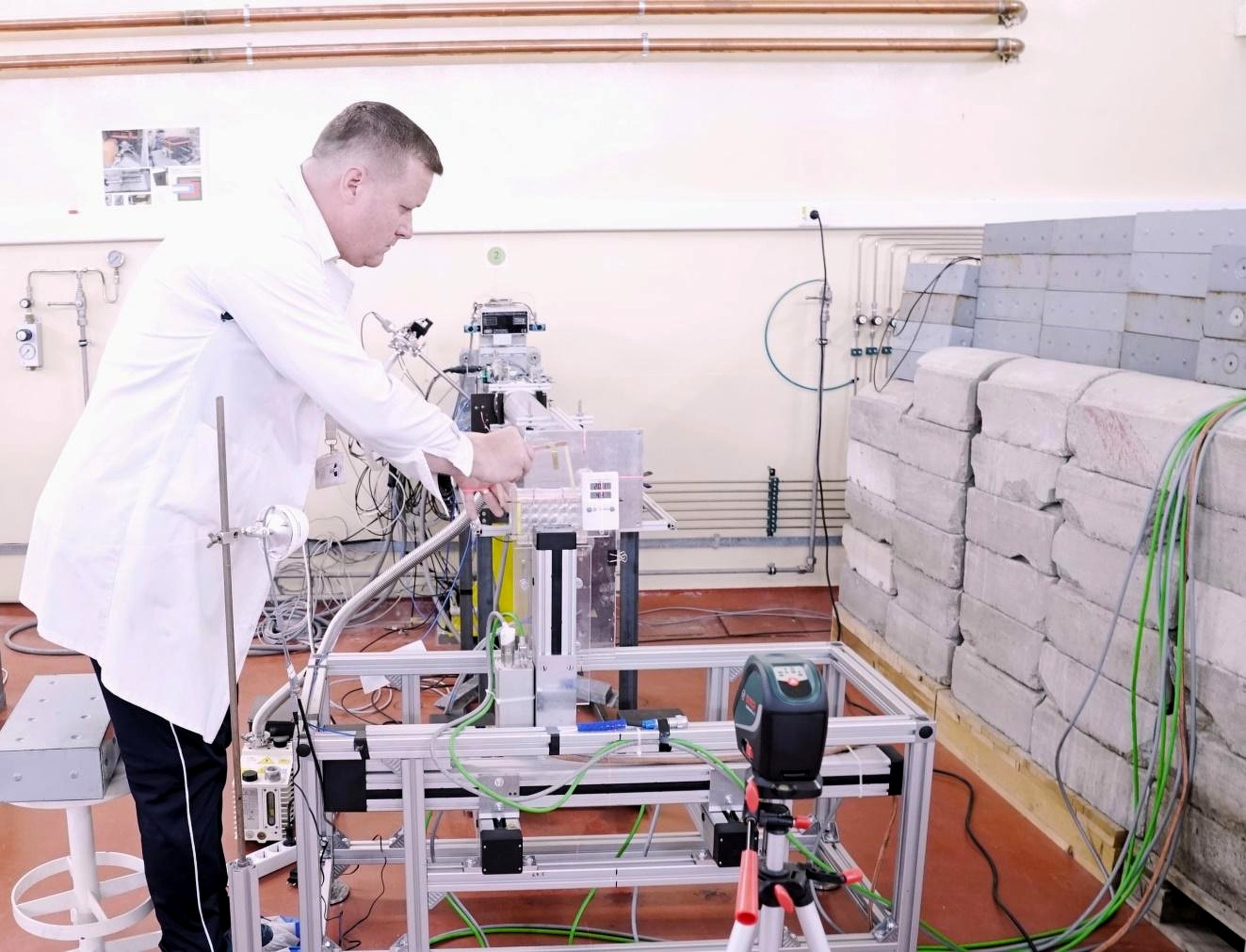
An external beam line delivers protons into a dedicated experimental hall for multi-disciplinary research. A purpose-built line provides proton currents in the picoampere range, matching the dose-rate requirements of radiobiology studies — the beam is spread on metal foils and a small number of protons selected to deliver controlled dose rates on the order of 1 Gy/min along the 6-metre long extension line.
- Automated precision-positioning system for cassettes containing biological cells in the irradiation field.
- Ionisation chamber for dosimetric calibration of the beam.
- Dedicated instrumentation for measuring ultra-low (femtoampere) currents.
The line supports investigations of cellular and sub-cellular response to proton irradiation under controlled, well-characterised dose conditions.
Solid-target proton irradiation and radiochemical post-processing
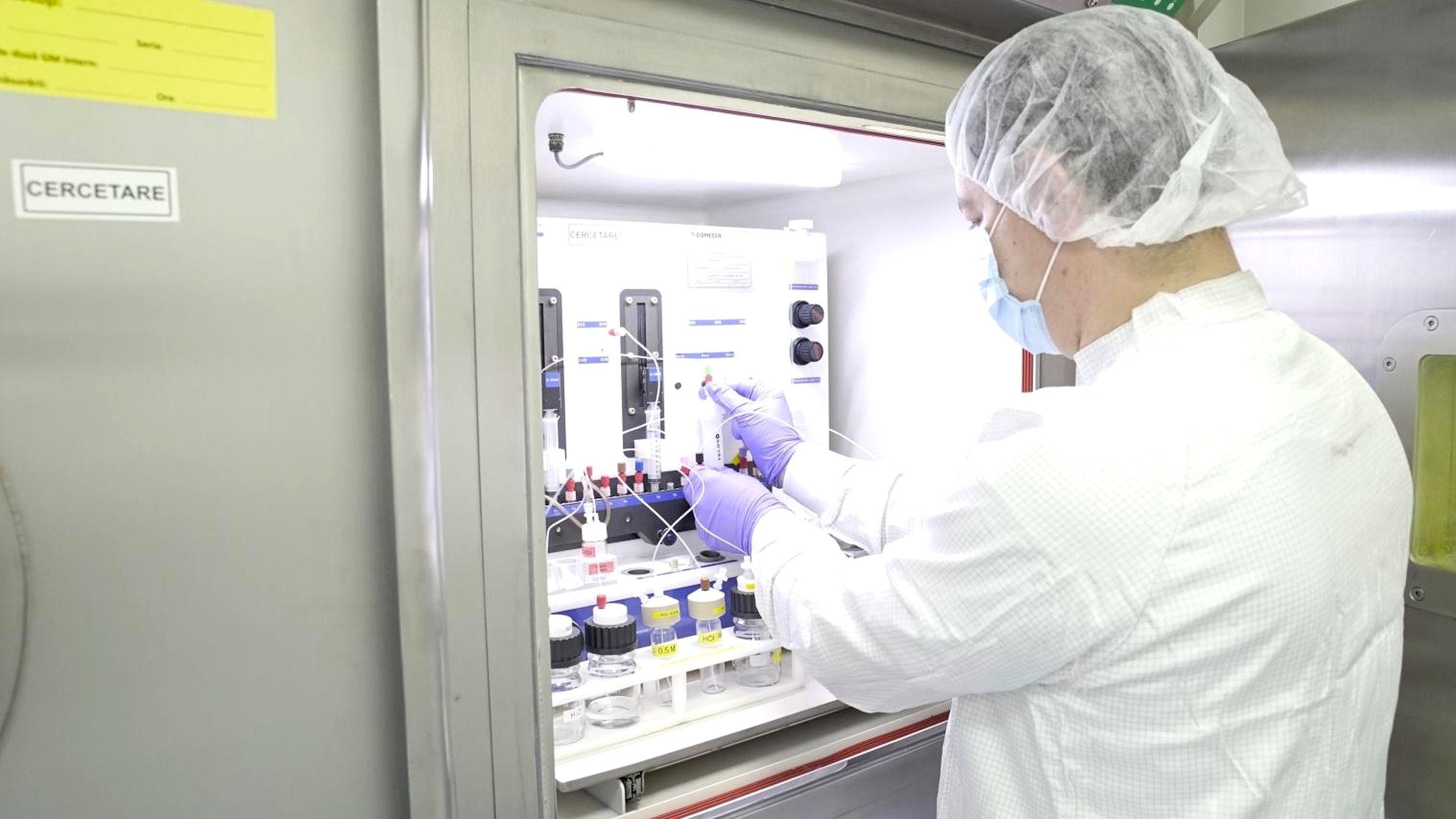
A second external beam line hosts a solid-target irradiation station, accessible for multi-disciplinary research focused on producing medical radioisotopes from solid targets.
- Remote-controlled irradiation station with automated operation.
- Pneumatic transfer to a coupled target preparation module based on electrodeposition.
- Post-processing modules for the irradiated target: dissolution, radiochemical separation, and purification.
The combined irradiation and post-processing system delivers radioisotopes for medical applications and supports research in radiochemistry, radiopharmacy, pharmacology, and radiobiology.
Small-animal μPET/CT imaging
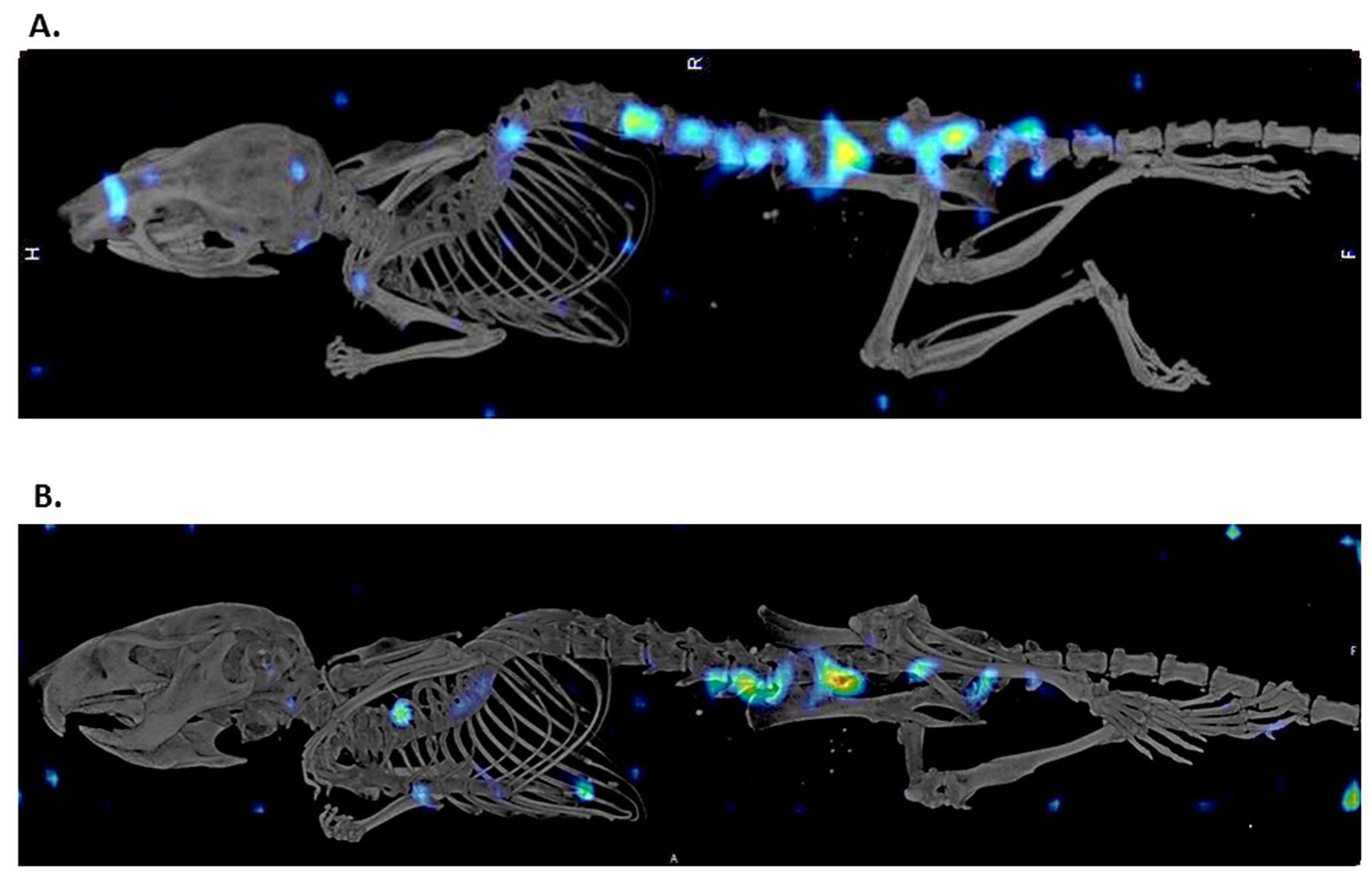
The Center for Radiopharmaceutical Research (CCR) operates a μPET/CT system for small-animal imaging studies (mice, rats, rabbits) — used in pharmacology, radiobiology, and radiopharmacy investigations with positron-emitting radiotracers such as 68Ga, 18F, 11C, 13N, 15O, 64Cu, 89Zr, and 124I.
- Sub-millimetre resolution imaging (down to ~30 μm).
- PET functional information complemented by morphological CT detail.
- Heated bed and gas anaesthesia system; vital-sign monitoring sensors.
- Reconstruction and ROI analysis with the dedicated PMOD software, including organ-level dose evaluation and dynamic biodistribution visualisation.
The system supports research directions including glucose, amino-acid, nucleic-acid and fatty-acid metabolism, tissue perfusion and blood flow, tumour staging and diagnosis, and pre- and post-therapy evolution.
Research it powers
How the TR-19 connects to DFNA's research directions
Access & collaboration
The TR-19 supports both routine medical-isotope supply and research collaborations—isotope production runs, solid-target irradiation campaigns, and proton-radiobiology experiments on the extension line.
If you need a specific radioisotope, an irradiation slot, or want to discuss a radiobiology experiment, get in touch and we'll help scope it.
Contact RadiopharmaceuticalsGood to know
- National-scale PET radioisotope supply.
- Solid, liquid and gaseous target irradiation.
- Dedicated 6 m research beamline for radiobiology.
- ALCEO solid-target station for 64Cu, 89Zr, 124I.