A laboratory at the heart of our isotope research
Before a single atom can be counted on an accelerator, the real work happens at the bench. The DFNA Chemistry Laboratory is where rocks, sediments, water, bone and ancient artefacts are turned — gram by careful gram — into samples clean enough to measure. It is the wet-chemistry backbone of our isotope work: its main job is preparing targets for the RoAMS 1 MV Tandetron AMS, though it runs analytical chemistry of its own as well.
Because AMS detects individual atoms at ratios as low as 1 in 1015, the chemistry has to be exquisite: low blanks, contamination control, well-characterised yields, and a deep understanding of the matrix being processed. This is where physicists, chemists, geologists, geographers, archaeologists and environmental scientists meet—around the bench.
Physics Chemistry Geology Geography Archaeology Environmental science Biology
At a glance
- Wet-chemistry preparation of AMS targets from milligram-scale samples.
- Beryllium and aluminium chemistry for cosmogenic 10Be and 26Al.
- Carbon pretreatment and graphitisation for 14C dating.
- Iodine extraction protocols for 129I in water and environmental samples.
- Stromatolite, sediment, rock and biogenic-carbonate analysis.
- Low-blank work in a contamination-controlled environment.
Primarily serves
RoAMS 1 MV Tandetron AMS — but supports projects across DFNA and external collaborators.
Beryllium & Aluminium chemistry
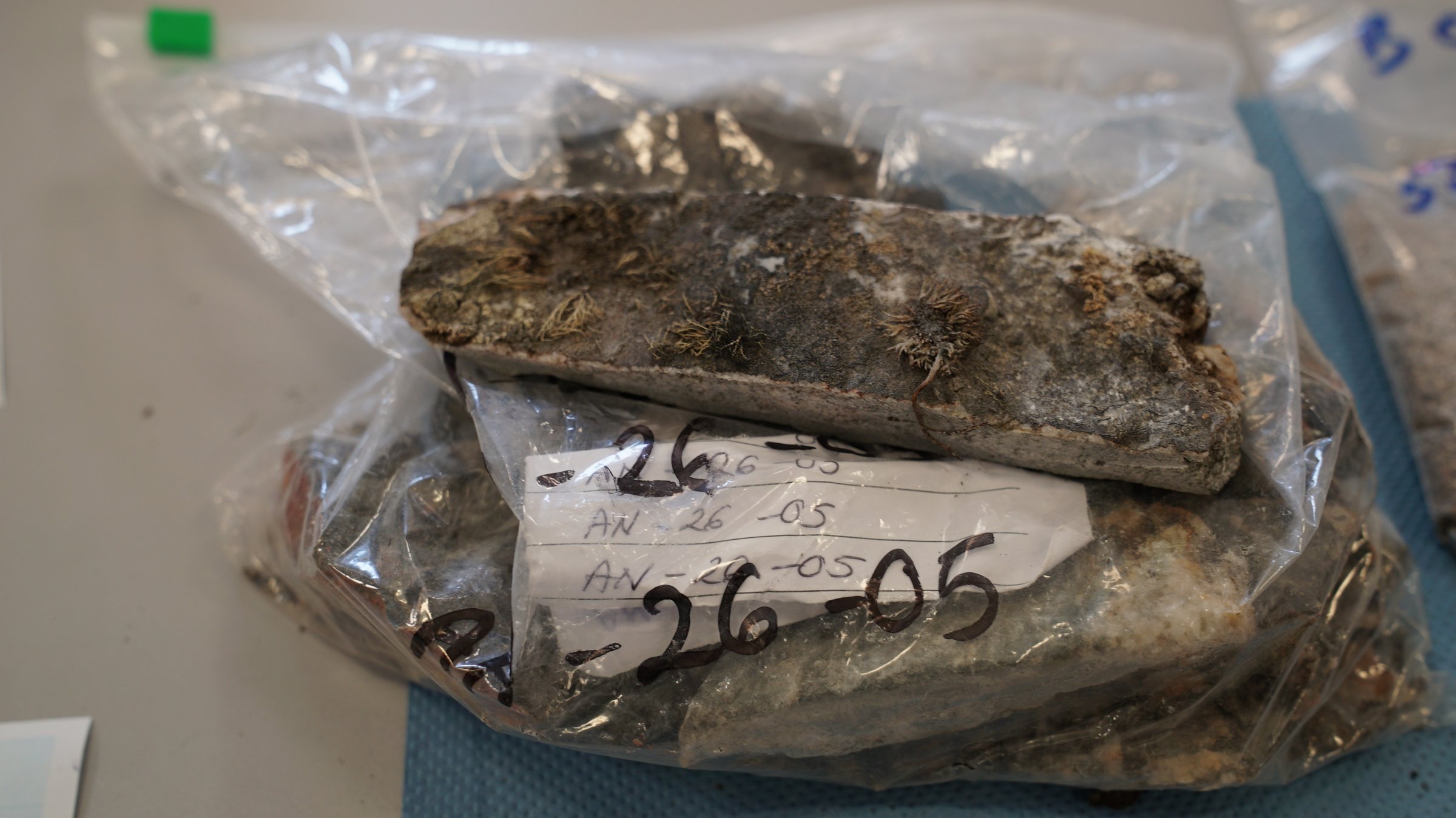
Cosmogenic 10Be and 26Al — from rock to AMS target
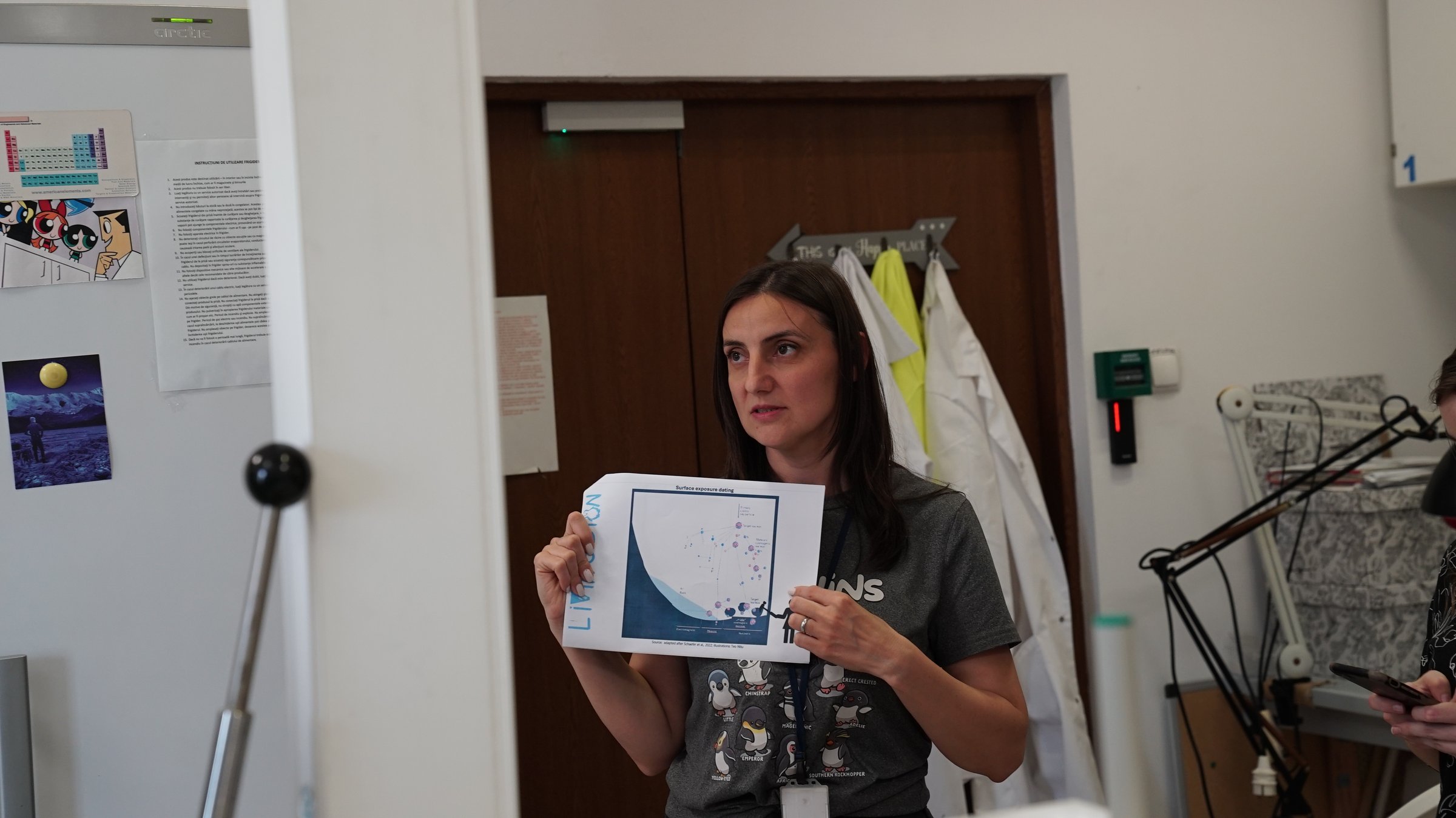
Cosmogenic radionuclides like 10Be and 26Al accumulate in surface minerals as they are exposed to cosmic rays. Measured by AMS, they give us surface-exposure ages, erosion rates and burial histories—powerful tools for reconstructing landscape evolution, glacial retreat, and past climate.
In the lab we work primarily with quartz separated from rock or sediment. The procedure involves crushing and sieving, removal of other minerals through selective acid leaching, dissolution of pure quartz, addition of a Be (and where needed, Al) carrier, separation of Be and Al through ion-exchange chromatography, and conversion to the oxide form pressed into AMS cathodes.
Every step is designed to keep procedural blanks low and yields high, because the isotope ratios we are after sit deep in the parts-per-quadrillion range.
Radiocarbon dating (14C)
From sample to graphite — the chemistry behind a clock for the past 50,000 years
Radiocarbon (14C) is a naturally occurring radioactive isotope of carbon. While an organism is alive, it exchanges carbon with the atmosphere; once it dies, its 14C decays at a known rate. Measuring how much remains tells us when that exchange stopped—the basis of radiocarbon dating.
First proposed by Willard F. Libby in 1946 and recognised with the Nobel Prize in Chemistry in 1960, radiocarbon dating has fundamentally reshaped archaeology, palaeoclimate science and environmental research. Since 1977, the use of AMS has revolutionised the field: instead of waiting for atoms to decay, AMS counts the 14C atoms directly, cutting sample sizes from grams to milligrams, shortening analysis times, and improving accuracy.
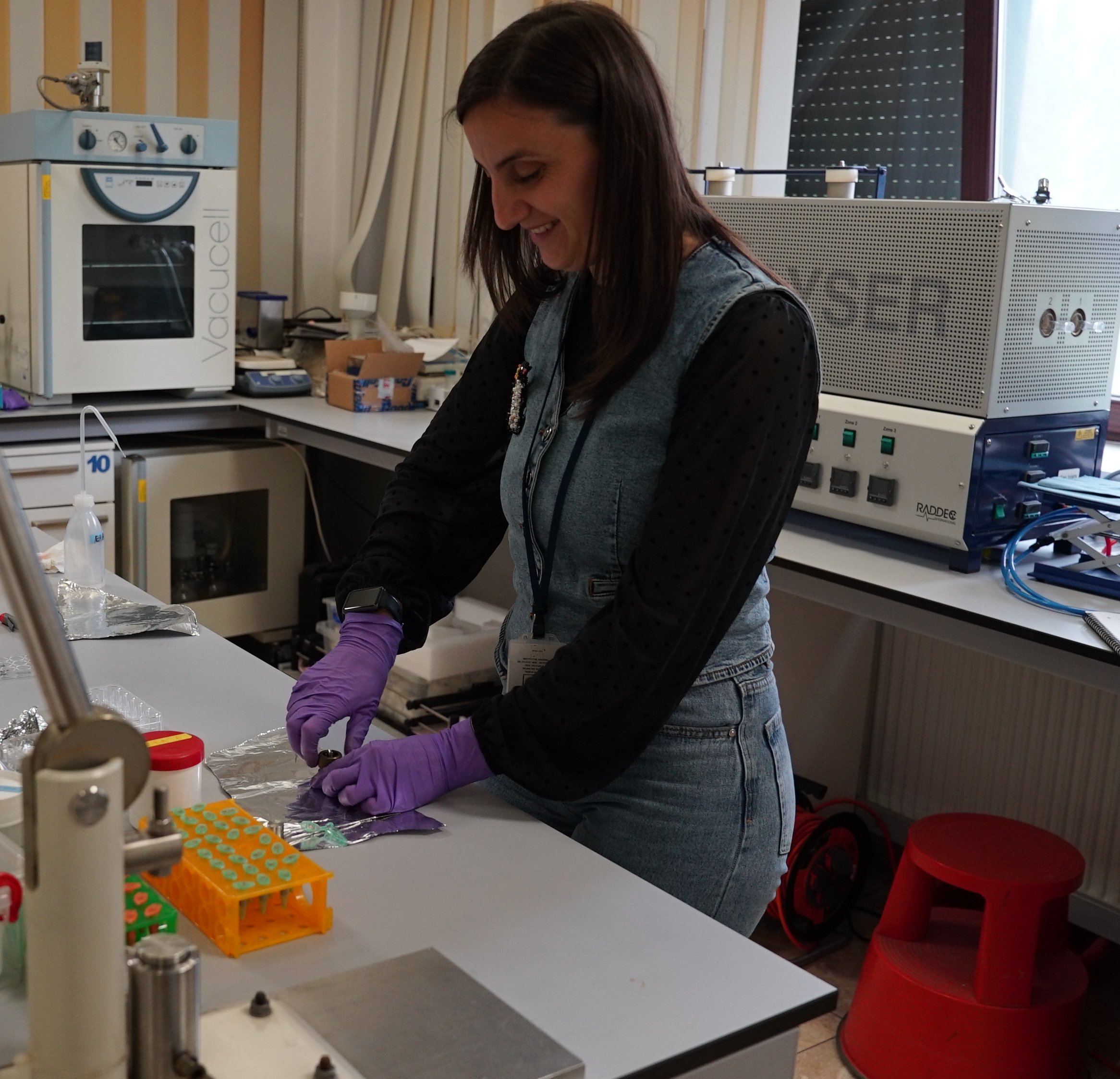
In our lab, every 14C measurement begins on the bench. Organic samples—wood, charcoal, peat, bone, textiles, shells, sediments—first go through an acid–base–acid (ABA) pretreatment: a hot acid wash dissolves carbonates, an alkaline step removes mobile humic acids, and a final acid rinse strips any reabsorbed atmospheric CO2. Bone is treated more gently to isolate its collagen.
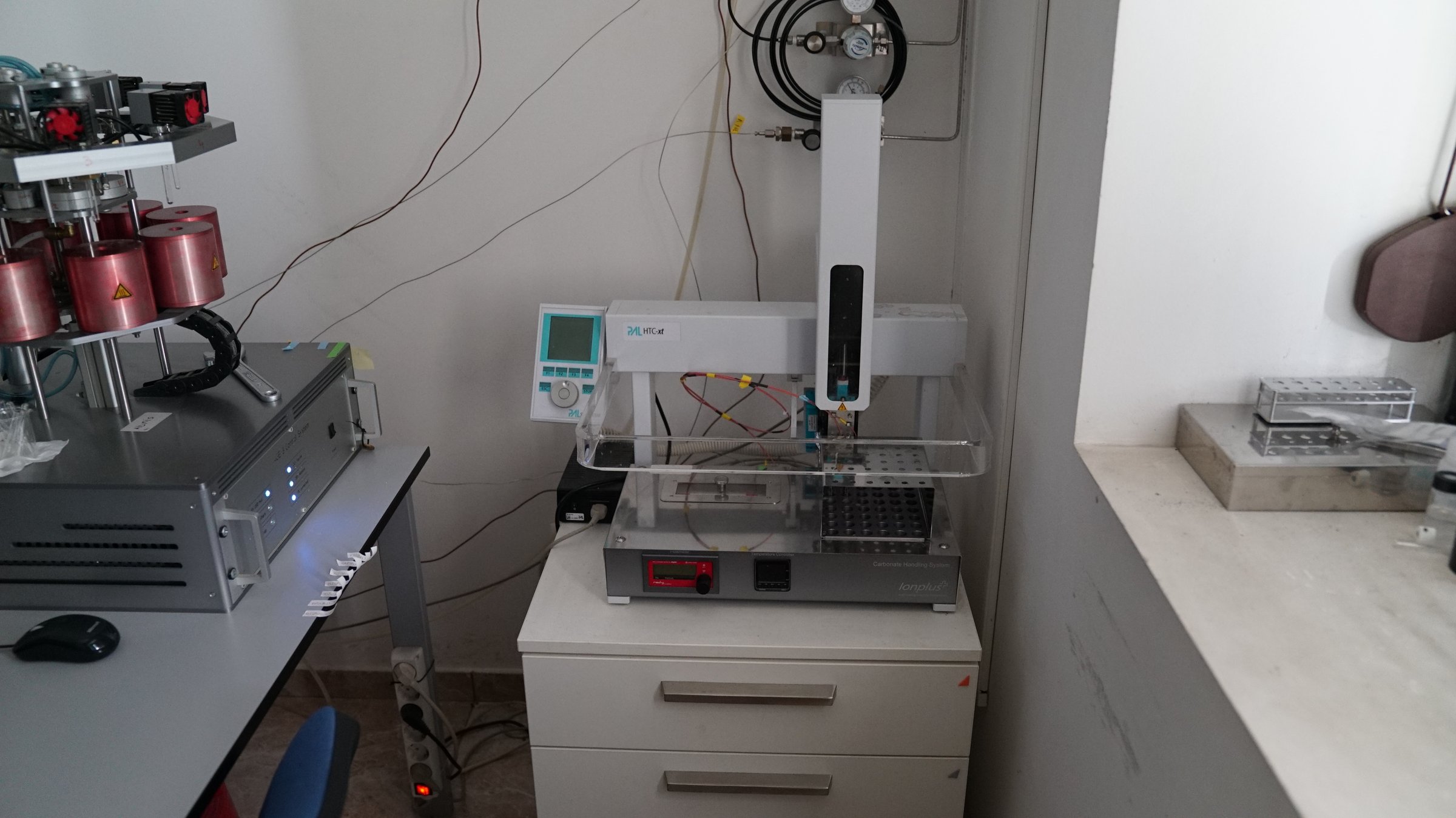
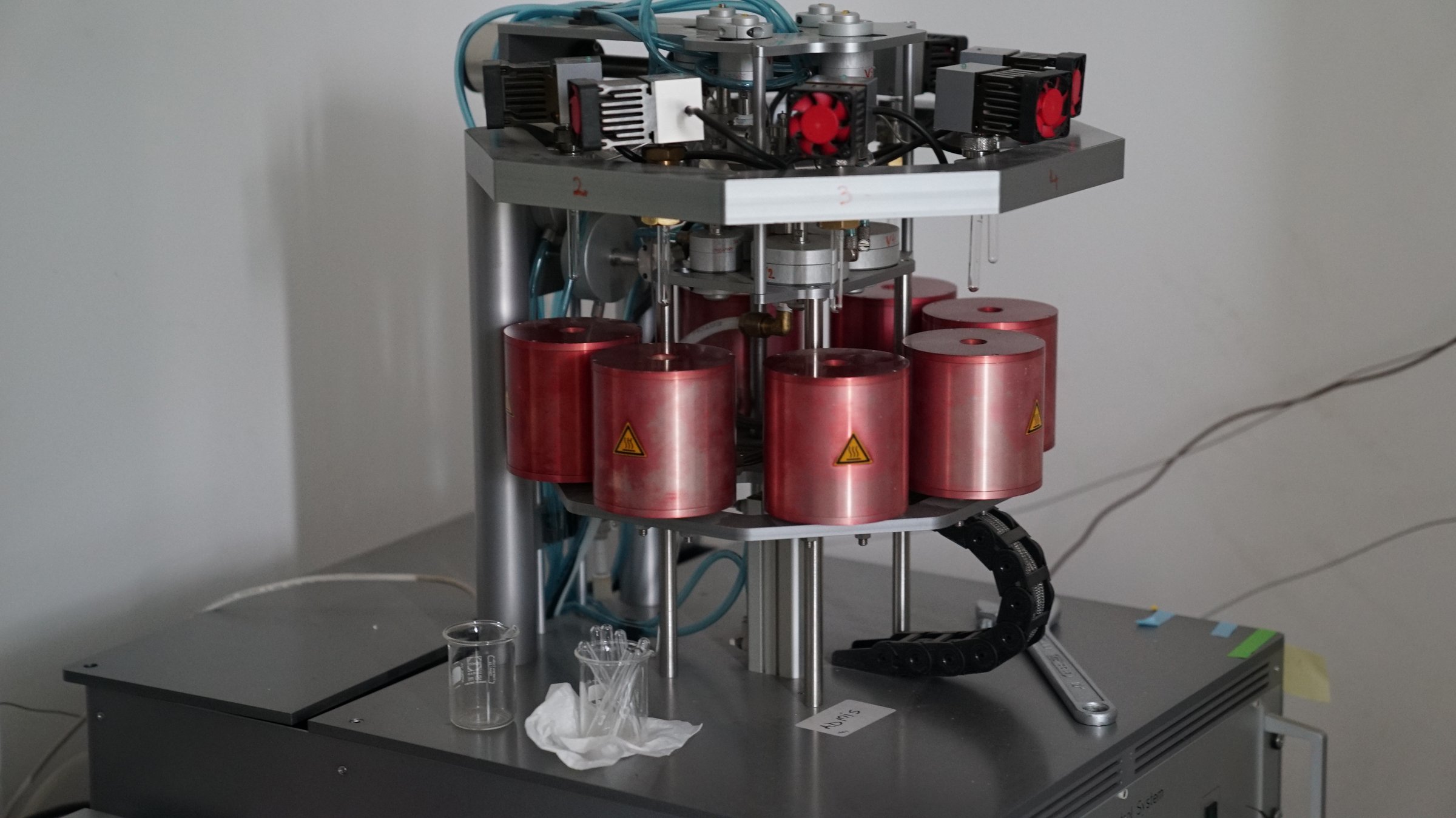
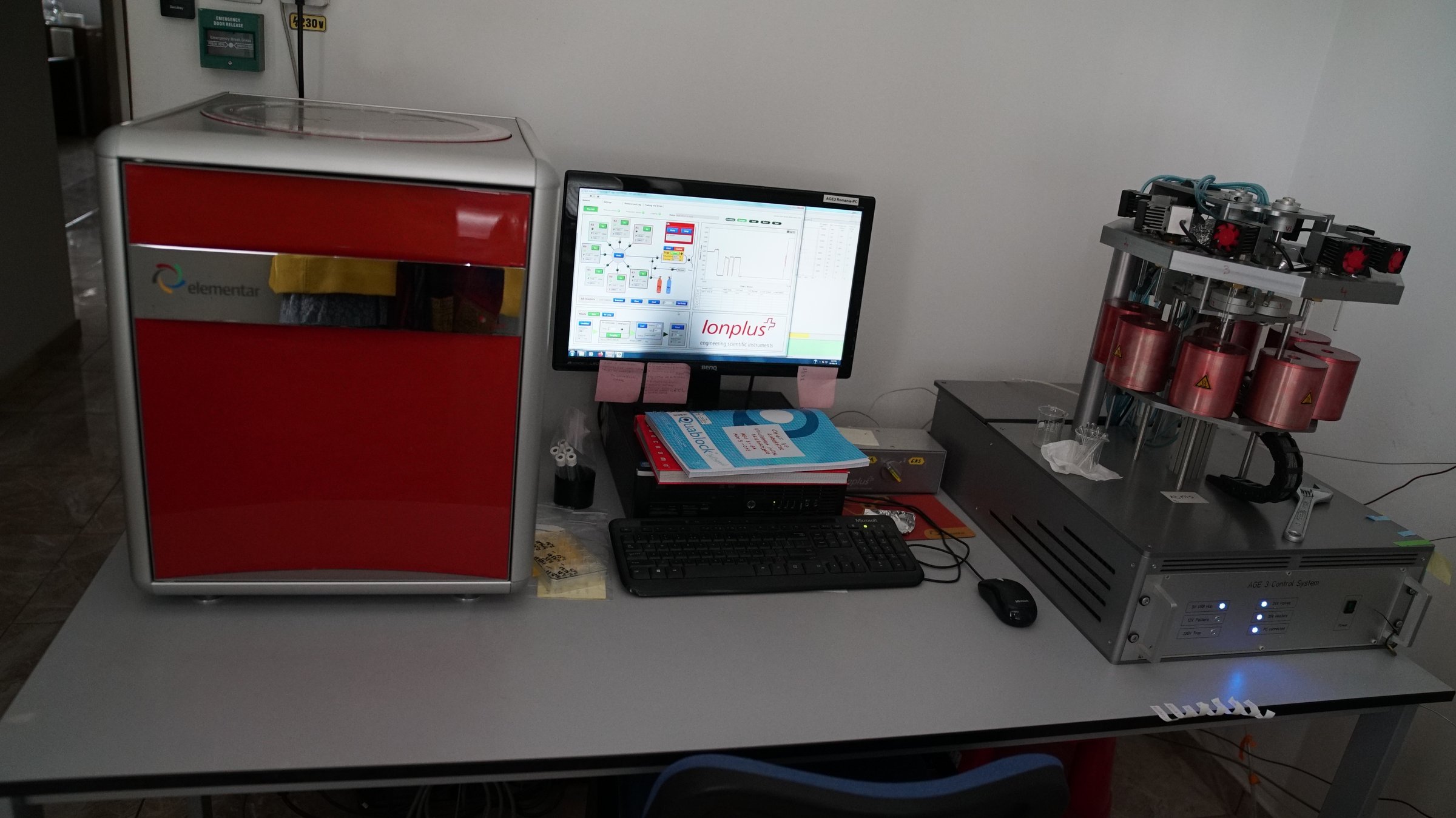
The cleaned material is then combusted in an elemental analyser to release pure CO2 (carbonates are instead digested in acid in the carbonate-handling system). That CO2 is catalytically reduced over an iron powder catalyst under hydrogen at ~580 °C in our automated graphitisation (AGE3) reactors, condensing the carbon into solid graphite. The graphite is pressed into aluminium cathodes—the targets RoAMS actually measures.
The accuracy of a 14C date depends as much on the quality of this chemistry as on the spectrometer itself. Tight blank control, careful matrix-specific procedures and well-characterised reference materials are what make our chronologies reliable—from a few centuries back to roughly 50,000 years before present.
From CO2 to graphite — the carbon line
Stromatolites & geological samples
Reading deep environmental history from carbonate archives
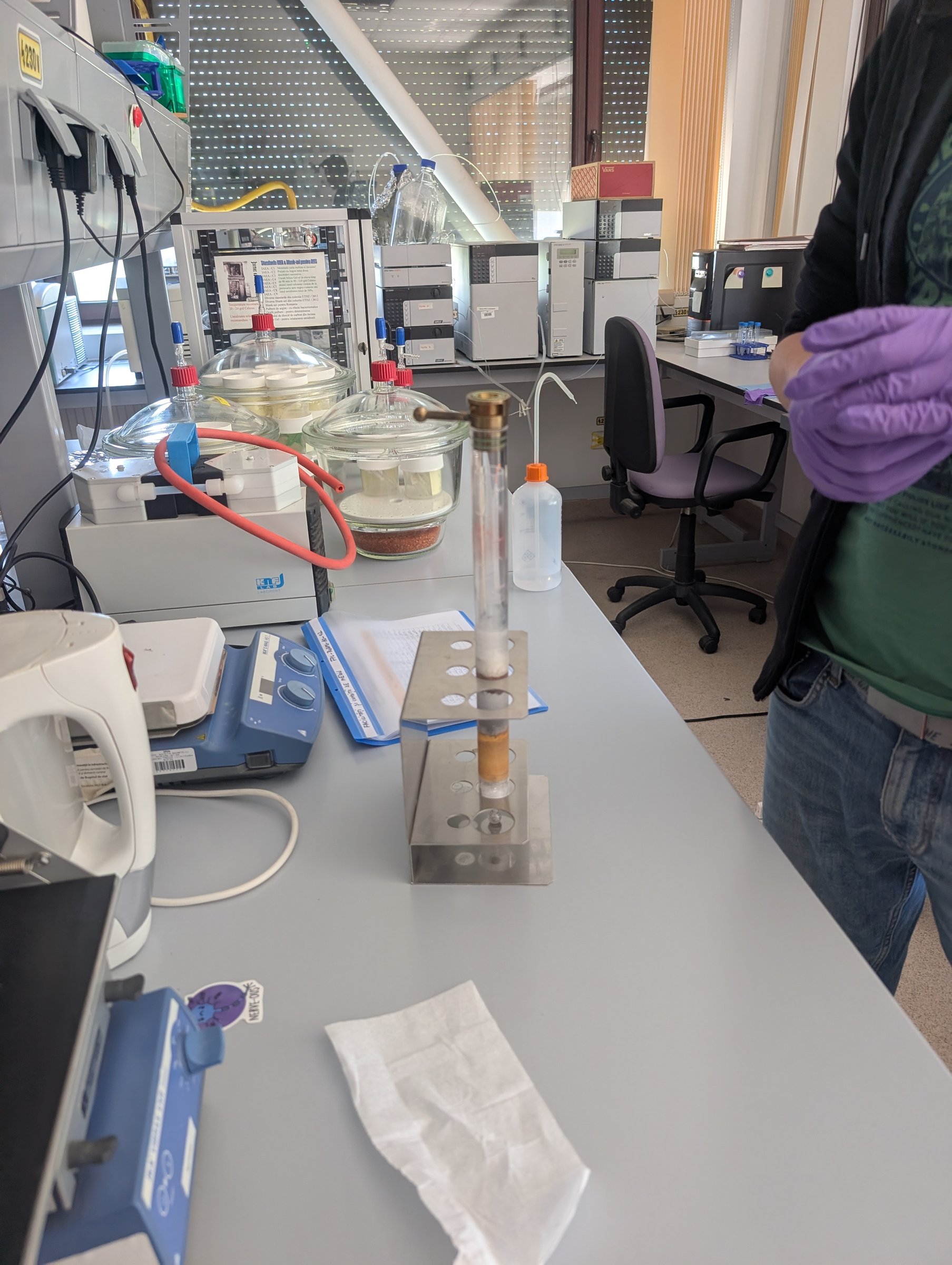
Stromatolites are layered carbonate structures produced by microbial communities over very long timescales. Their laminae record changes in the chemistry, biology and climate of the environments in which they grew—making them invaluable archives for both geology and astrobiology.
In our lab, stromatolite, travertine, speleothem and sedimentary carbonate samples are sub-sampled, characterised, and chemically pretreated for isotope analyses. Procedures cover the removal of contaminants, controlled dissolution and—where appropriate—the targeted extraction of specific phases. The resulting fractions feed into radiocarbon dating, stable-isotope work and trace-element studies.
This dual perspective—geological context and atom-level measurement—lets us put events in absolute time, from the last few centuries back to tens of thousands of years.
Other procedures we run
Sample preparation across the DFNA isotope portfolio
Radiocarbon pretreatment
Chemical cleaning of wood, charcoal, peat, bone and textiles—removing contaminants before combustion to CO2 and graphitisation for 14C AMS.
Iodine extraction (129I)
Low-iodine water and environmental sample preparation for 129I AMS—supporting nuclear-pollution and ocean-circulation studies.
Mineral & sediment work-up
Crushing, sieving, density separation, magnetic separation and chemical cleaning of mineral and sediment samples ahead of isotope or trace-element analysis.
Combustion & graphitisation
Conversion of organic samples to CO2 and reduction to graphite—standardised targets for AMS measurement.
Precise weighing & aliquoting
Analytical-balance work for milligram-scale sample handling, blank tracking and accurate carrier addition.
Contamination control
Dedicated benches, acid-cleaned glassware and ultra-pure reagents—essential when working at parts-per-quadrillion isotopic levels.
Research it powers
The bench where dating, environmental and heritage research begin
No measurement happens without the chemistry. From radiocarbon chronologies and cosmogenic surface-exposure ages to nuclear-pollution tracing with 129I and palaeoclimate reconstruction with 10Be, the separations and targets prepared here are what make the science downstream possible.
Inside the lab
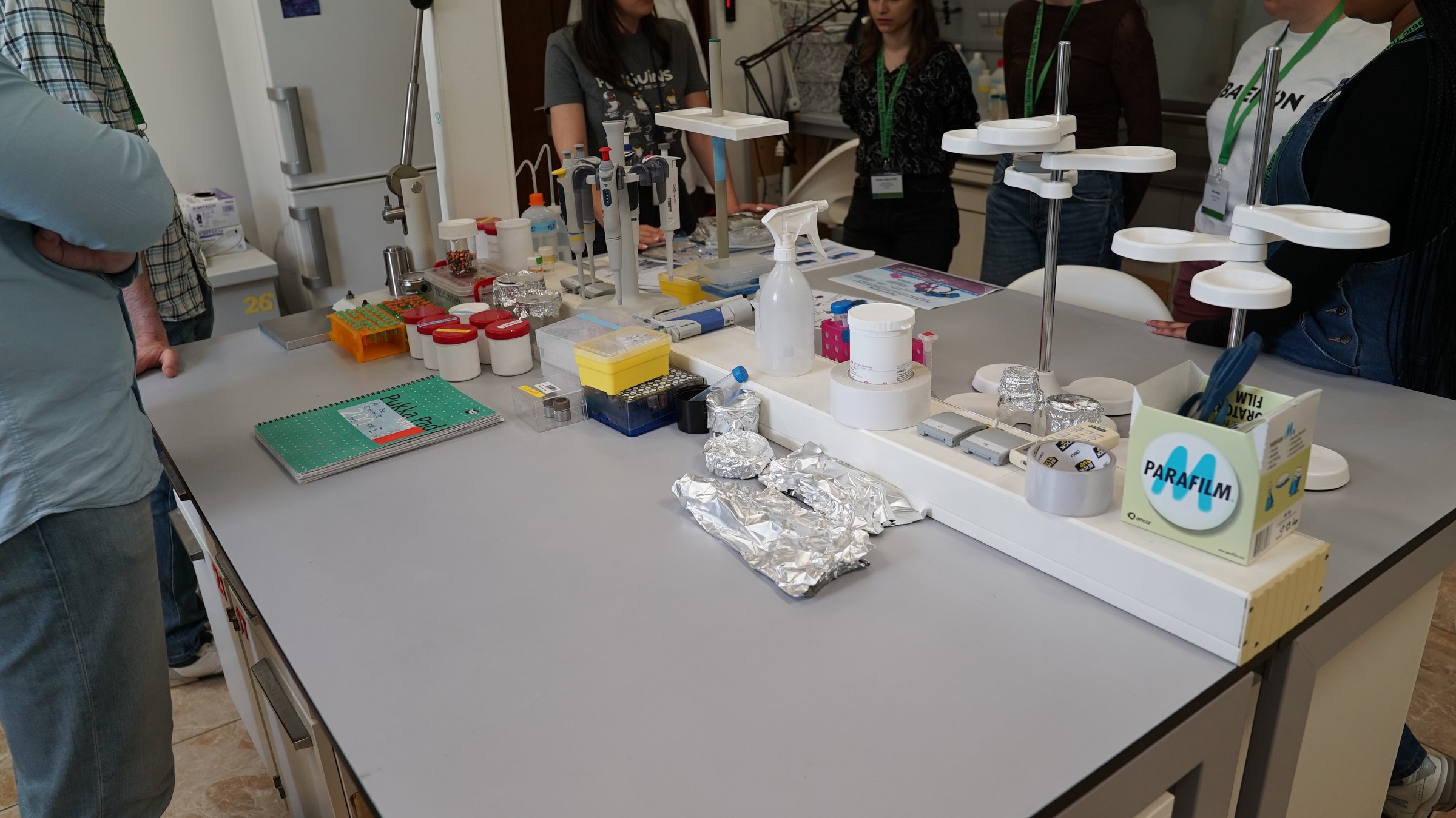
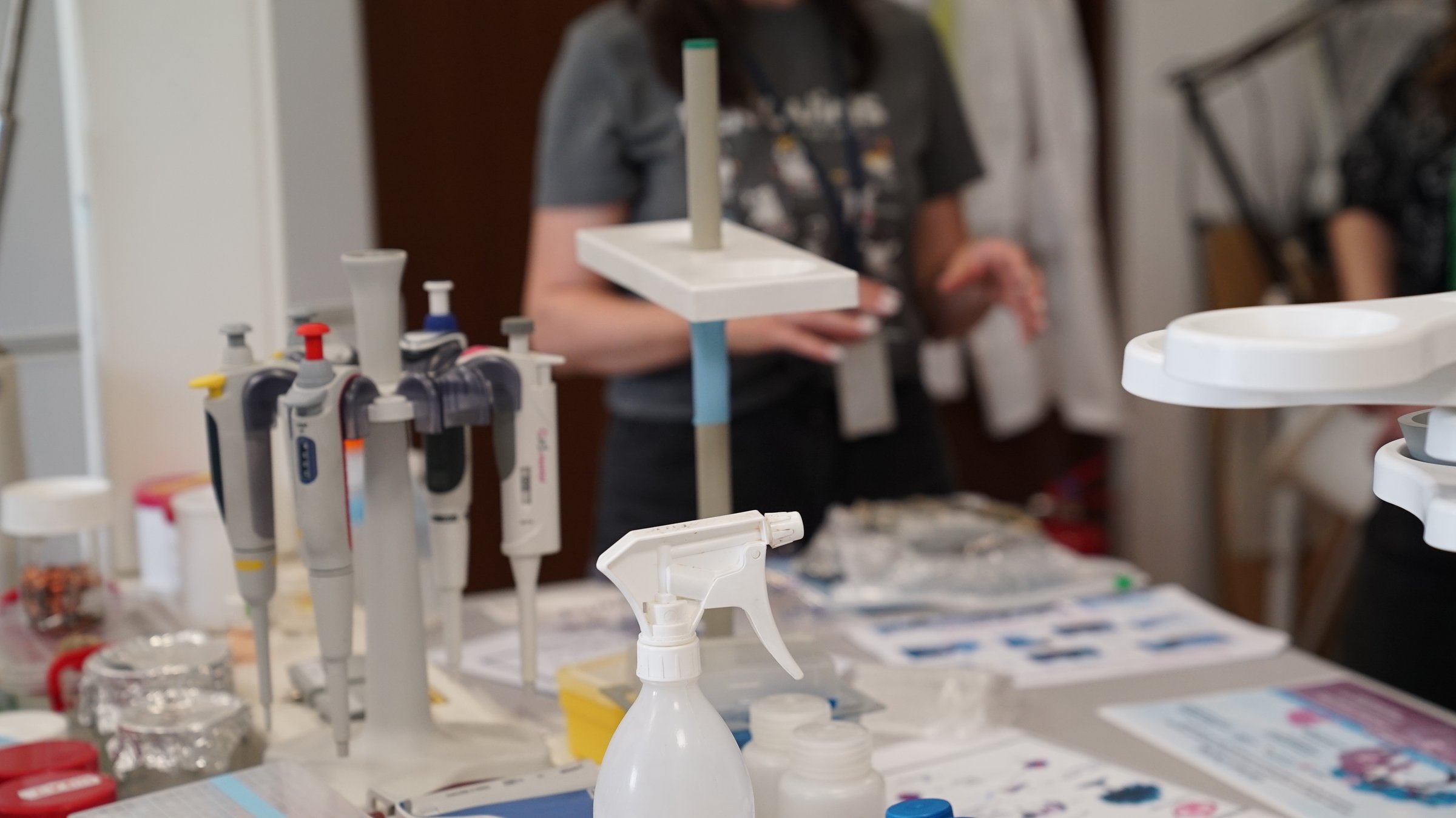
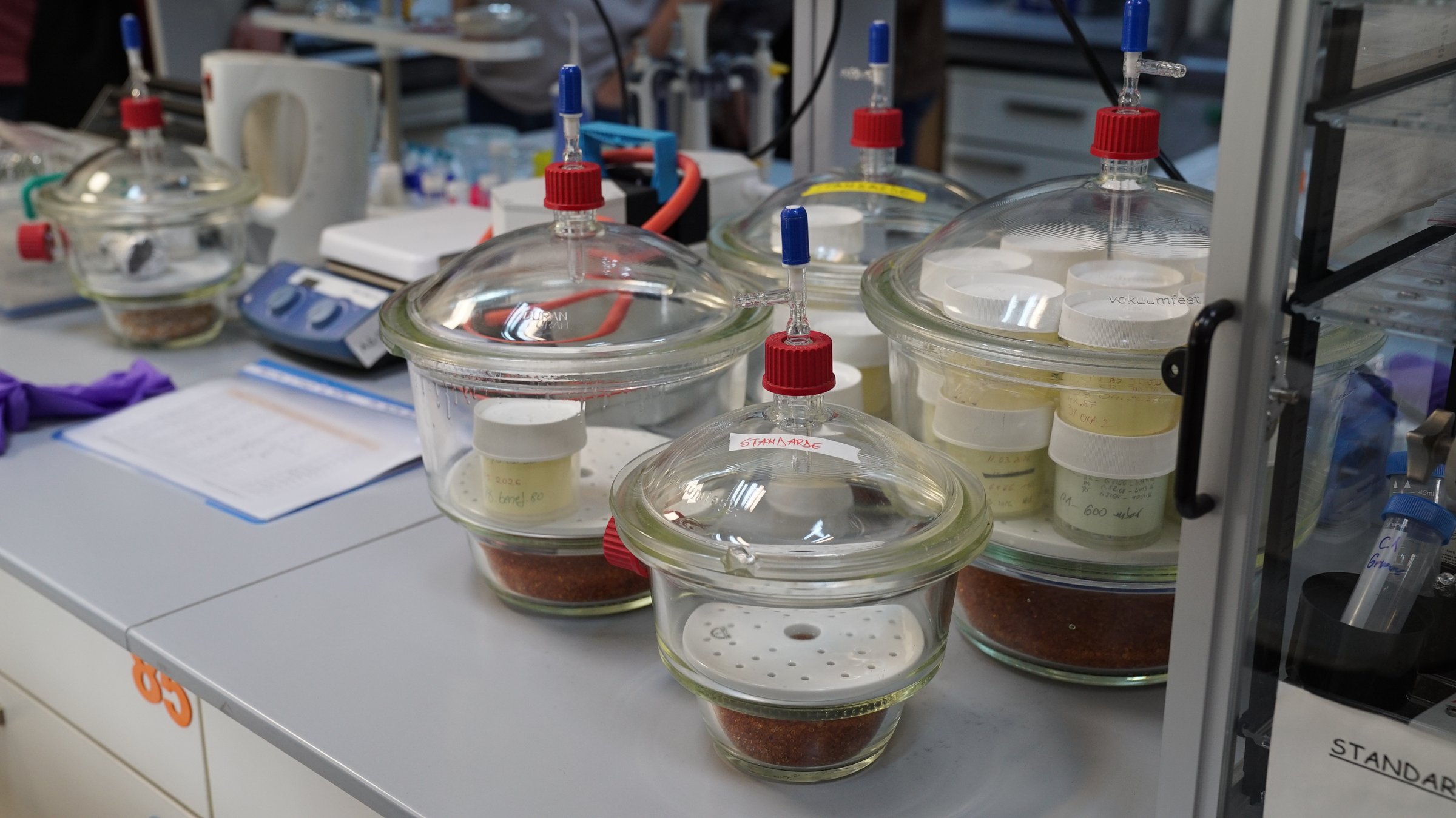
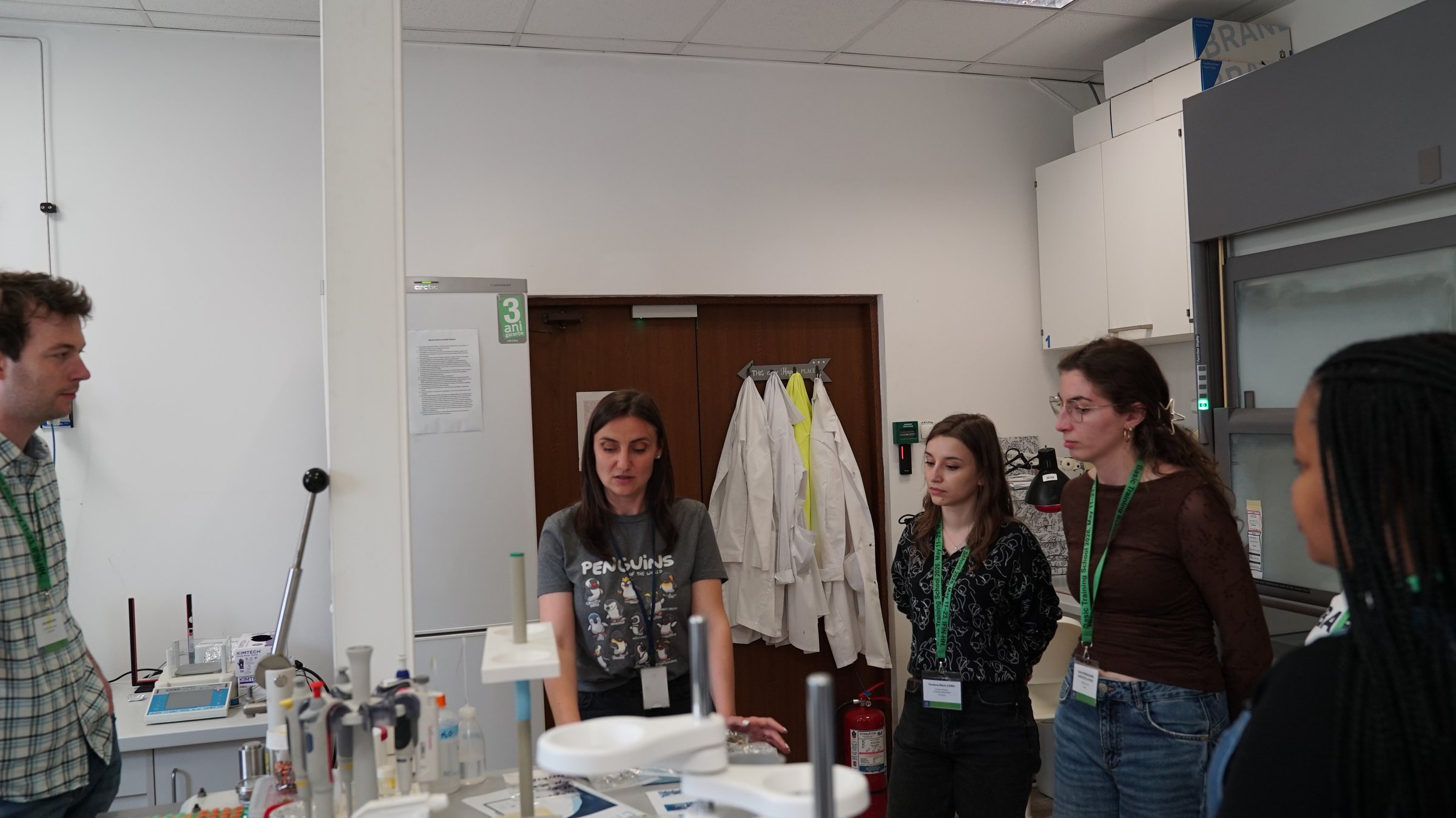
Snapshots from the bench and student visits
Working with the lab
Collaborations, sample submission & training
The chemistry lab welcomes academic and industry collaborations across physics, chemistry, earth and environmental sciences, archaeology and biology. We support both routine sample-preparation services for AMS measurements and methodological development for new sample types.
Students and visiting researchers are also welcome through the DFNA internship programme—several placements each year are hosted in the lab.
Send samples or enquire
For sample-submission guidelines (packaging, quantities, shipping), see the AMS sample-submission section on the RoAMS 1 MV page.
For new projects and collaborations, please get in touch.